

anamorphic
- adjective
- /ˌænəˈmɔrfɪk/
- Specialized
- Some fossils exhibit anamorphic traits that indicate a slow transition between species.
Examples
-
The anamorphic process of frogs is fascinating.
-
The study focused on anamorphic evolutionary processes seen in ancient amphibians.
-
Anamorphic changes in the organism’s structure were observed over multiple generations.
-
Many species undergo anamorphic changes during their life cycle.
-
The study focused on an anamorphic process that demonstrated how one species of butterfly gradually transforms into another.
-
Researchers observed an anamorphic change in the jellyfish, revealing its development from a polyp to a medusa.
-
The documentary illustrated the anamorphic life cycle of frogs, emphasizing their transformation from tadpole to adult.
Synonyms
 177
4.6
177
4.6

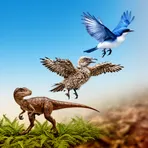
About slow change over a long time, often in living things
 3
9.9
3
9.9
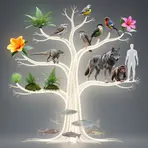
About how kinds of animals and plants change and are related over time

Continuing to change or develop slowly over time

Relating to how a group of animals or plants changes and splits into new forms over time

Large changes in living things that happen over a very long time, like new kinds of animals or plants forming
Surface Forms
Morphology
anamorphic = anamorph (semi-transparent) = ana + morph + ic
The morphemes signal 'again/changed form', but the biological usage is specialized and may not be obvious to average learners.
Etymology
Anamorphic comes from Greek parts ana- ('back' or 'again') and morph ('shape'), the same morph in the verb 'to morph'. So calling a change anamorphic means a form slowly changes from one type to another, which is why scientists use it for gradual evolution.