
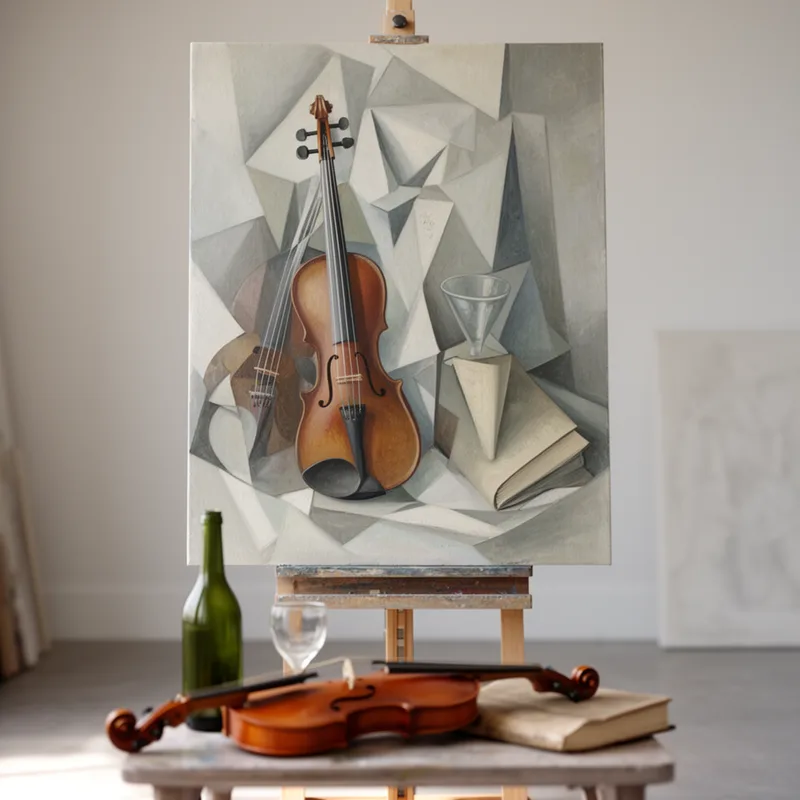
analytical cubism
- noun
- /ˌænəˈlɪtɪkəl ˈkjuːbɪzəm/
- Pablo Picasso's early work in analytical cubism features a limited color palette and complex forms.
Examples
-
Analytical Cubism—about which claims for the "autonomy" of his art could (later) have been made, by him or by subsequent generations of critics.
Academic text (1990) -
Analytical cubism is often recognized for its focus on dissecting objects into geometric shapes.
-
The exhibit showcased several paintings representative of analytical cubism, highlighting its distinctive style.
Surface Forms
Morphology
The compound is compositionally predictable: 'analytical' (examining or breaking down) plus 'cubism' (an art style) yields the idea of a type/phase of cubism that analyzes or dissects forms. However, the specific art-historical details (early phase, monochromatic palette, Picasso/Braque period) are specialist and not inferable from the words alone, so a learner's understanding would be partial rather than fully transparent.
Etymology
Analytical cubism gets its name from how artists 'analyzed' objects: they broke things into flat, block-like shapes and showed many sides at once. In the phrase, analytical points to this careful study of form and cubism to the cube-like planes, so the term now means the early Cubist style that reduces objects to simple geometric parts and often uses muted colors.

