
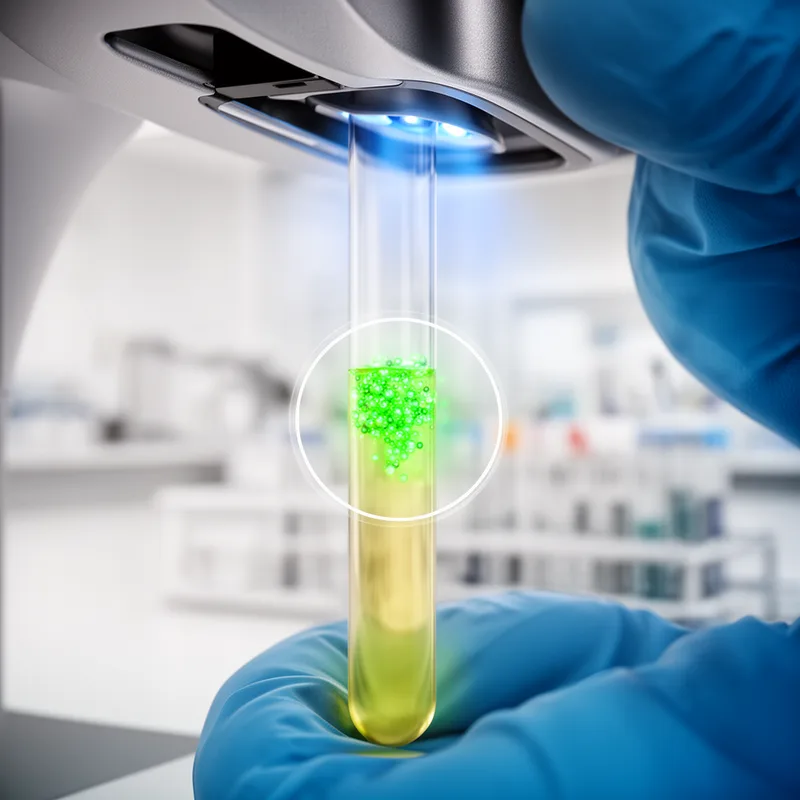
analyte


 1
8.2
1
8.2
- noun
- /ˈænəˌlaɪt/
- Specialized
- HS-SPME procedure with C8-coated fiber yielded an excellent linear relationship between the peak area counts and analyte concentration in the range of 2.00-10.00% v/v.
- target analyte
- analyte concentration
- analyte in the sample
Examples
-
To disperse the analyte evenly in the powder, the researchers blended the two ingredients in glycerin.
Academic text (2002) -
Some researchers started embedding the analyte molecules in a matrix of another substance.
Academic text (2002) -
The weight and density of the final solutions were used in the calculation of the analyte concentration.
Academic text (2000) -
In our study, we were not limited to studying a particular class or select group of analytes.
Academic text (2015) -
For each analyte, the peak area corresponding to the target ion was extracted.
Academic text (2016) -
The test uses a photo-chemical reaction that produces coloration proportional to the amount of the analyte in the sample.
Academic text (1997) -
The serum was analyzed for chlordane analytes and other pesticides.
Academic text (1994) -
The analytes were eluted with 4 mL of methanol and then evaporated.
Academic text (2018) -
The analytes were extracted using lab-made C8-coated fiber under the optimum HS-SPME conditions.
Academic text (2007) -
The test uses a photo-chemical reaction that produces coloration proportional to the amount of the analyte in the sample.
Surface Forms
Morphology
analyte = analyze (transparent) = analyt + e
The noun names the object of 'analyze' (something being analyzed), so learners who know 'analyze/analysis' can infer the meaning by standard noun formation.
Etymology
The word analyte comes from the verb analyze, from old Greek parts ana- 'up' and lyein 'to loosen', which together give the idea 'to break apart'. An analyte is the substance scientists 'break apart' or test in the lab, so the origin explains the modern meaning.