
amygdaliform
- adjective
- /əˈmɪɡdəˌlɪfɔrm/
- Specialized
- She noticed the amygdaliform shape of the fruit.
Examples
-
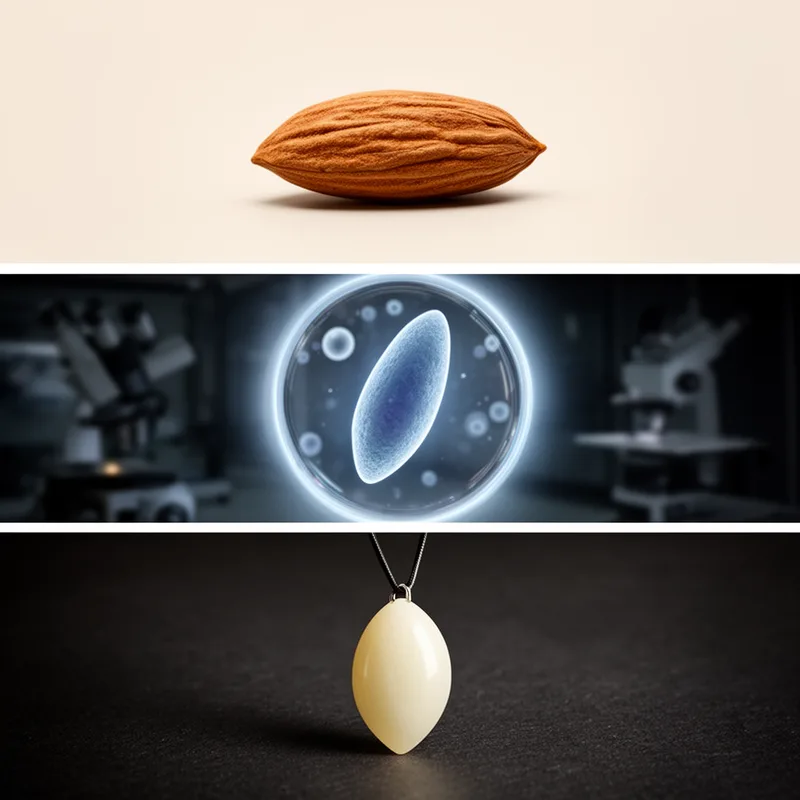
The artist carved an amygdaliform pendant from a piece of ivory.
-
The amygdaliform leaves of the plant are quite unique.
-
Certain seeds are noted for their distinctive amygdaliform shape.
-
In the microscope view, the cell nucleus appeared distinctly amygdaliform.
-
The artist crafted a necklace featuring an amygdaliform pendant that resembled an almond.
-
In botany, the amygdaliform leaves of the tree are easily identifiable among other species.
-
She admired the amygdaliform structure of the ornamental seed that was placed on the table.
Synonyms

 3
3.6
3
3.6

An oval shape with slightly pointed ends like an almond

Shaped like an almond

Having the shape of an almond

Having the shape of an almond

An oval shape that is pointed at one or both ends like an almond
How Almond-Shaped

Surface Forms
Morphology
amygdaliform = amygdala (semi-transparent) = amygdal + - + iform
Formed from the combining form 'amygdal-' (almond) plus the adjectival suffix '-iform' meaning 'shaped like'; the classical combining form and technical register make the relation clear in morphology but not fully obvious to average learners.
Etymology
Amygdaliform comes from the Greek root amygdal- meaning 'almond' and the English ending -form meaning 'shape'. So it literally means 'almond-shaped', which is why we use it for things that look like an almond.