
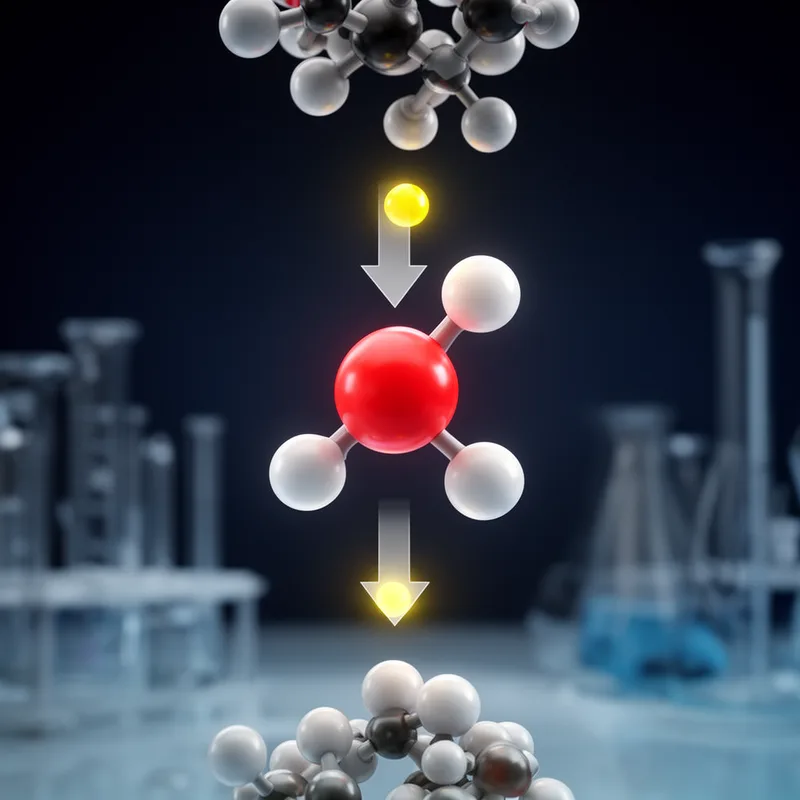
amphiprotic
- adjective
- /ˌæmfɪˈproʊtɪk/
- Specialized
 :
amfiprótico
:
amfiprótico
- Water is an amphiprotic molecule because it can act as both an acid and a base.
Examples
-
Water is considered amphiprotic because it can both donate and accept protons.
-
Some ions are amphiprotic, meaning they can both donate and accept protons during reactions.
-
The amphiprotic nature of the compound makes it useful in various chemical processes.
-
An amphiprotic substance can react with both acids and bases.
-
Water is an amphiprotic molecule because it can act as both an acid and a base.
-
The amphiprotic nature of the compound makes it useful in various chemical processes.
-
Some ions are amphiprotic, meaning they can both donate and accept protons during reactions.
Synonyms
Able to act like an acid or a base in chemical reactions
Surface Forms
Morphology
amphiprotic = protic (semi-transparent) = amphi + proton + ic
Formed from the prefix 'amphi-' (both) + the adjective 'protic' (relating to protons); the parts are compositional but technical, so not fully transparent to general learners.
Etymology
Amphiprotic starts with Greek amphi- meaning 'both', as in amphibian, and ends with proton, the hydrogen particle a substance can give or take, so an amphiprotic substance can both give and take a proton.

