
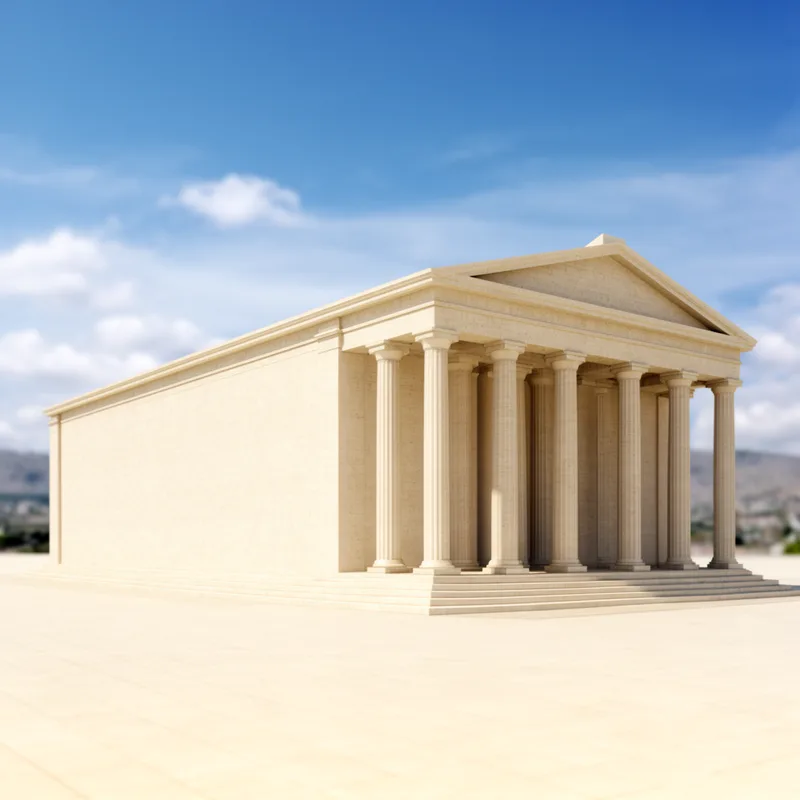
amphiprostyle
- adjective
- /ˌæmfɪˈprɒstaɪl/
- Specialized
- The ancient temple was designed in the amphiprostyle manner, with columns only at the front and rear.
Examples
-
The ancient temple was designed in the amphiprostyle manner, featuring columns at both the front and back to create a symmetrical look.
-
The architect chose an amphiprostyle layout to emphasize both entrances of the building.
-
Some of the most famous Greek structures are amphiprostyle, giving a balanced appearance to their facades.
-
The ancient temple was built in an amphiprostyle manner.
-
Many Greek temples are amphiprostyle in design.
-
Some of the most famous Greek structures are amphiprostyle, showcasing free-standing columns at their front and rear entrances.
-
The architect chose an amphiprostyle design for the new cultural center, highlighting its two main entrances with impressive columns.
Surface Forms
Morphology
Etymology
Amphiprostyle comes from the Greek parts amphi- ('both') and prostyle ('columns at the front'). You can see amphi- in familiar words like amphitheatre or amphibian, which also carry the idea of 'both'. So an amphiprostyle building has porches with free-standing columns at both the front and the back, not along the sides.

