

amphibious
 4
6.5
4
6.5

- adjective
- /æmˈfɪbiəs/
- After about forty-five days, the juvenile fish returns to settle on the mudflat and begin its amphibious adult life.
- amphibious creature
- amphibious life
Examples
-
At a glance, the domed back, covered by a hard carapace, might have belonged to one of that amphibious race.
Fiction book (1992) -
The swamp was a mysterious place, full of exotic wildlife and strange botanical specimens, with creatures both amphibious and terrestrial.
Fiction book (1996) -
"They are amphibious, those boys," I said to Renato.
Fiction book (1998) -
In many ways, the communities surrounding the bay reflect the mangroves' amphibious nature.
Academic text (2012) -
In Costa Rica, there are approximately 175 amphibious species.
Blog text (21) -
Aquatic exhibits display rare and endangered aquatic and amphibious animals.
Academic text (1996) -
Hippos are particularly important because their amphibious lifestyle requires extensive daily movements between water and land (McCarthy et al. 1998a).
Academic text (2009) -
The group is amphibious: sea kraits come ashore to rest and lay eggs in moist, rocky places along the seashore.
Academic text (2009) -
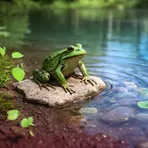
Frogs are fascinating because they are amphibious, spending part of their lives in water and part on land.
-
The amphibious nature of salamanders allows them to thrive in both aquatic and terrestrial environments.
Synonyms
 1
5.5
1
5.5
Describing animals that live on land and in water, like frogs
Compounds


- Specialized
2
8.3
A military attack in which troops move from ships or planes onto an enemy shore

- Specialized
1
8.1
A military action that lands soldiers from ships onto a shore


Surface Forms
Etymology
Amphibious comes from Greek parts amphi- meaning 'both' and bio- meaning 'life', the same 'bio' you see in biology. That's why animals in the class Amphibia, like frogs, are called amphibious: they can live both in water and on land.