
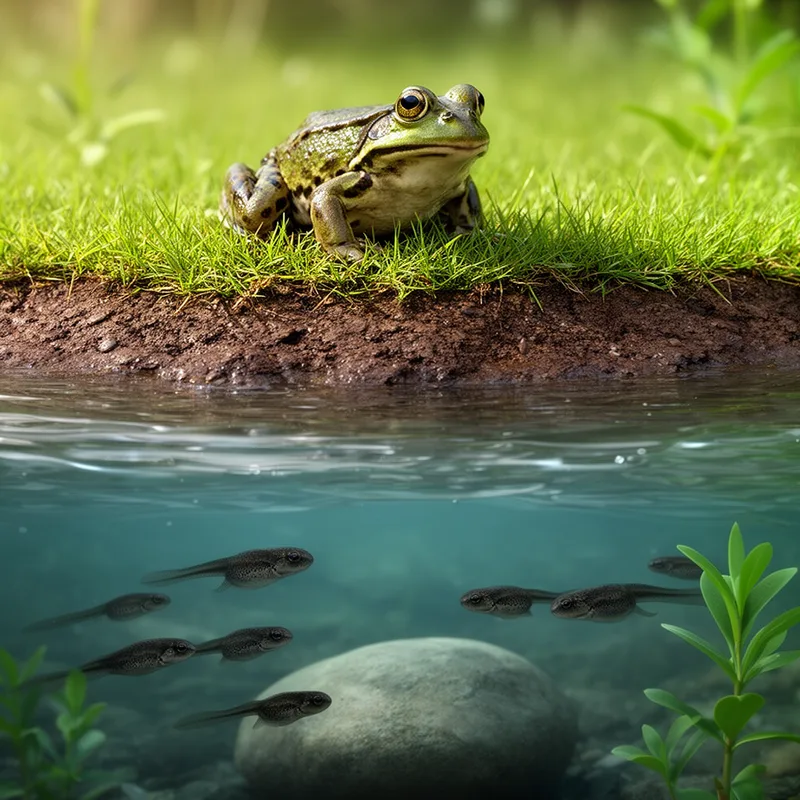
amphibiotic
- adjective
- /æmˌfɪbiˈɑtɪk/
- Specialized
- The life cycle of frogs is a classic example of an amphibiotic organism.
Examples
-
Researchers studied the amphibiotic characteristics of dragonflies in the wetland area.
-
Many insects are amphibiotic, spending their larval stage in water before becoming land-dwelling adults.
-
The amphibiotic frog spends its early life in water.
-
Many amphibiotic species thrive in both aquatic and terrestrial environments.
-
Many insects are amphibiotic, spending their larval stage in water before becoming land-dwelling adults.
-
The life cycle of frogs is a classic example of an amphibiotic organism.
-
Many amphibiotic species thrive in both aquatic and terrestrial environments.
Surface Forms
Morphology
Etymology
The word amphibiotic comes from Greek parts amphi- 'both' and -biotic from bios 'life', the same idea you see in amphibian. So an amphibiotic animal lives 'both' in water when young and on land as an adult.

