
amperometric
- adjective
- /ˌæmpəˈrɑːmɛtrɪk/
- Specialized
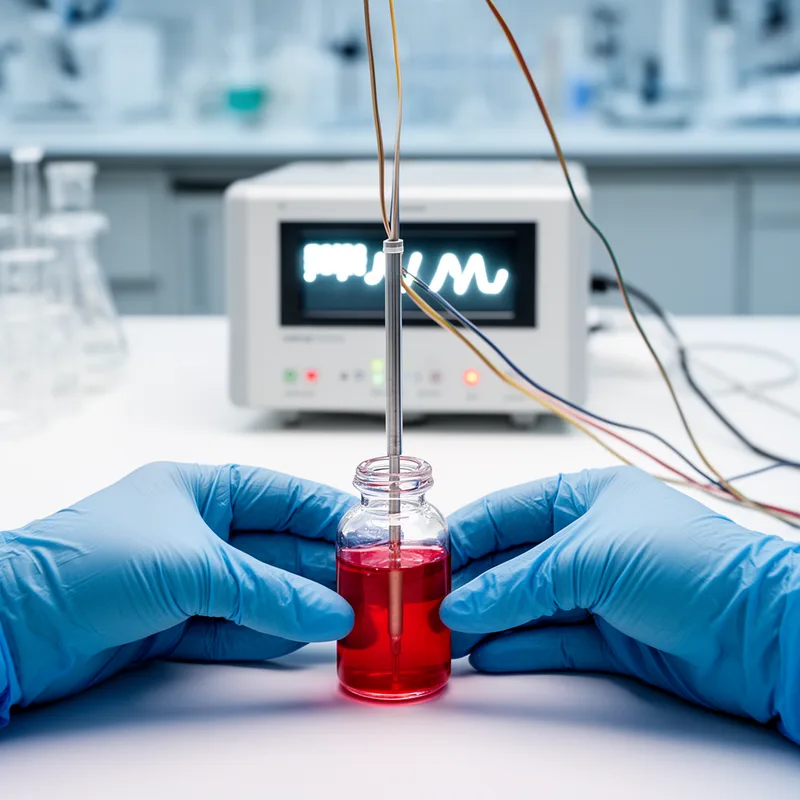
- Using an amperometric sensor, the technician recorded the changes in current during the experiment.
Examples
-
The FX-1000P chlorine analyzer measures using the amperometric method with an accuracy better than ±1 percent.
Academic text (1998) -
The center zero dechlorination control system measures and controls the chlorine or sulfite residuals at or near zero values using a continuous amperometric analyzer and microprocessor-based controller.
Academic text (1998) -
Amperometric titration may be the most practical for facilities that do not have access to IC equipment.
Academic text (2002) -
It incorporates a continuous amperometric analyzer and a microprocessor-based controller.
Academic text (1998) -
The amperometric method is often used in laboratories to determine the concentration of specific ions in a solution.
-
Researchers prefer amperometric analysis for its precision in measuring electric currents in chemical reactions.
Surface Forms
Morphology
amperometric = amperometry (semi-transparent) = ampere + metry + ic
Formed by adding the adjectival suffix '-ic' to the technical noun 'amperometry'; the relation to measuring electric current is clear but the term is specialized.
Etymology
Amperometric comes from ampere, the unit for electric current, and -metric, which means 'measure', just like in meter. So an amperometric device measures electric current, which is why it is used to test chemical and biological samples.

