
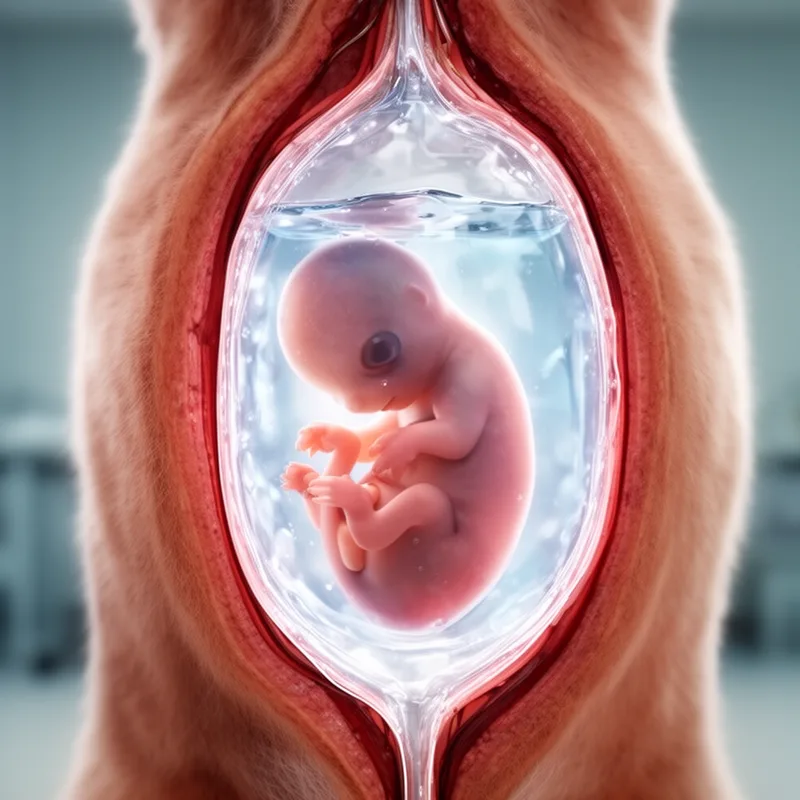
amnion
- noun
- /ˈæmniən/
- Specialized
- Furthermore, the zygote-formed embryos are enveloped by the yolk sac (this part does not develop in the human fetus), amnion, allantois, and chorion.
Examples
-
Once the symbiosis of gestation is at an end, our human entourage forms a second amnion.
Academic text (1997) -
The amnion surface epithelial cells do not express HLA A, B, C, or DR or beta2-microglobulin.
Academic text (2007) -
And it is face—textual and interpersonal—that drags me out of the amnion and clandestinity of "me" and pushes me into public view.
Academic text (1998) -
The amnion is crucial for protecting the developing embryo during pregnancy.
-
In many reptiles, the amnion forms a protective layer around the egg.
-
Doctors can sometimes see the amnion during an ultrasound scan of the fetus.
Synonyms

 1
4.4
1
4.4

A thin bag that surrounds and protects a developing baby in the womb


 1
9.9
1
9.9
A thin inner sac of fluid that surrounds a developing baby in the womb

A thin skin that sometimes covers a baby's head when it is born
Surface Forms
Etymology
Amnion comes from the old Greek word amnos, which means 'lamb'. Early doctors thought the thin sac around a developing animal looked like a lamb's covering, so amnion now means the thin sac that protects the embryo.