

amir
 11
9.2
11
9.2

- noun
- /əˈmɪr/
- The Amir ruled the region with an iron fist, ensuring that all his orders were followed without question.
- the amir of Kuwait
- Amir Abdullah
- Amir al
Examples
-
Faisal's brother, Amir Abdullah of Transjordan, was crowned king of an independent Transjordan in 1946.
Academic text (2002) -
When the Hashemite Amir of Transjordan offered the Jews an autonomous region, our teachers, the British, jumped at it.
Fiction book (2002) -
In an open letter to the amir, the king noted that
Academic text (2000) -
A man suspected of being the Amir of an Al-Qaeda training camp.
-
In 1992, a petition was submitted to the Amir demanding the restoration of the National Assembly through direct and free elections.
Academic text (1995) -
His Highness Surat Khan, Amir of Suristan.
-
In ancient times, an Amir was often seen as the protector of his people and their customs.
-
The local Amir held a grand feast to celebrate the harvest and invite his subjects to share in the bounty.
Synonyms
 145
9.9
145
9.9
A title for a ruler or important leader in Central Asia and nearby countries
 68
7.0
68
7.0
A respected man who leads an Arab family, village, or tribe
 54
7.5
54
7.5
A respected older person who leads an Arab tribe or village
 37
8.1
37
8.1
A Muslim ruler in parts of Africa or Arabia
 29
6.2
29
6.2
A Muslim ruler of a country, often from the Ottoman Empire
 4
9.9
4
9.9
A Muslim leader who rules or judges people using Islamic law
 1
9.9
1
9.9
A local ruler or chief in parts of Arabia and Africa


 1
8.9
1
8.9
A tribal leader who makes decisions and cares for a clan or community

A person who independently rules a region, often in Arabia or Africa

A person who leads a community and settles disputes, often in North Africa and the Middle East
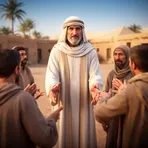
A person who leads an Arab village, tribe, or family and has power in the community
How Powerful

Surface Forms
Etymology
Amir comes from the Arabic root amr, which means 'command' or 'to give orders'. You can see the same idea in the English word admiral, from the Arabic phrase 'amir al-bahr' meaning 'commander of the sea', so amir means a ruler or leader.