
ambulacral
- adjective
- /ˌæmbjʊˈleɪkrəl/
- Specialized
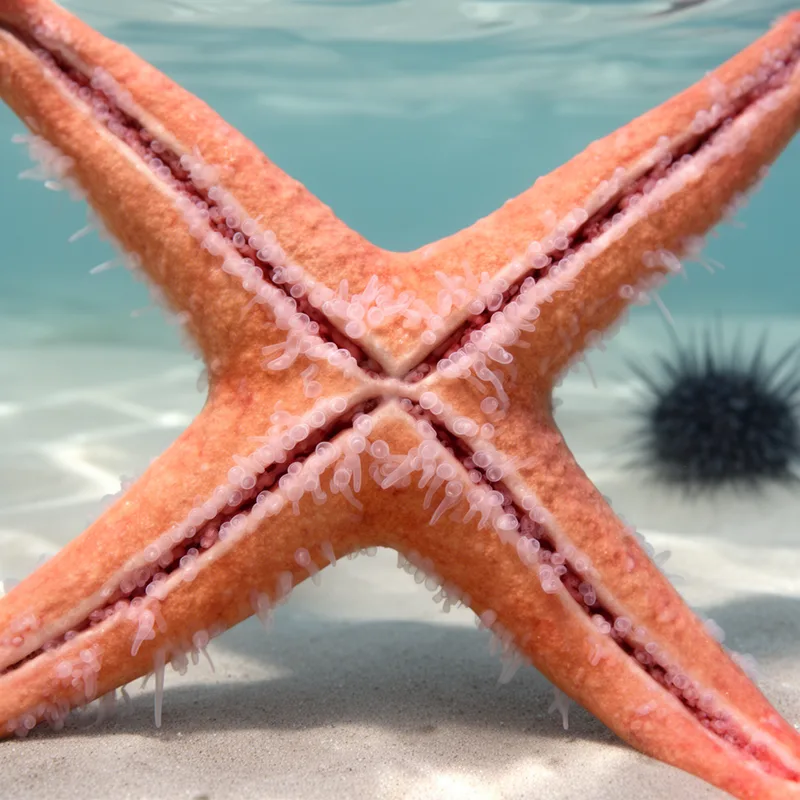
- The starfish's ambulacral grooves are lined with tube feet used for locomotion and feeding.
Examples
-
The ambulacral grooves of the starfish are essential for movement.
-
The biologist studied the development of the ambulacral system in juvenile echinoderms.
-
Damage to the ambulacral areas can impede the movement of sea urchins.
-
Sea urchins have distinct ambulacral areas that help them navigate their environment.
-
The starfish's ambulacral grooves are lined with tube feet, which help it move across the ocean floor.
-
Sea urchins rely on their ambulacral areas to effectively maneuver through rocky crevices.
-
Researchers observed that damage to the ambulacral system affects the feeding behavior of echinoderms.
Surface Forms
Morphology
ambulacral = ambulacrum (semi-transparent) = ambulacrum + al
The adjective is a regular technical derivation from the noun 'ambulacrum', but the specialized biological term is unlikely to be inferable for many learners.
Etymology
The word ambulacral comes from the Latin words ambulare 'to walk' and ambulacrum 'walkway', and is related to the English word amble. So in starfish and sea urchins the ambulacral areas are the 'walking' parts with tube feet that the animals use for movement.

