
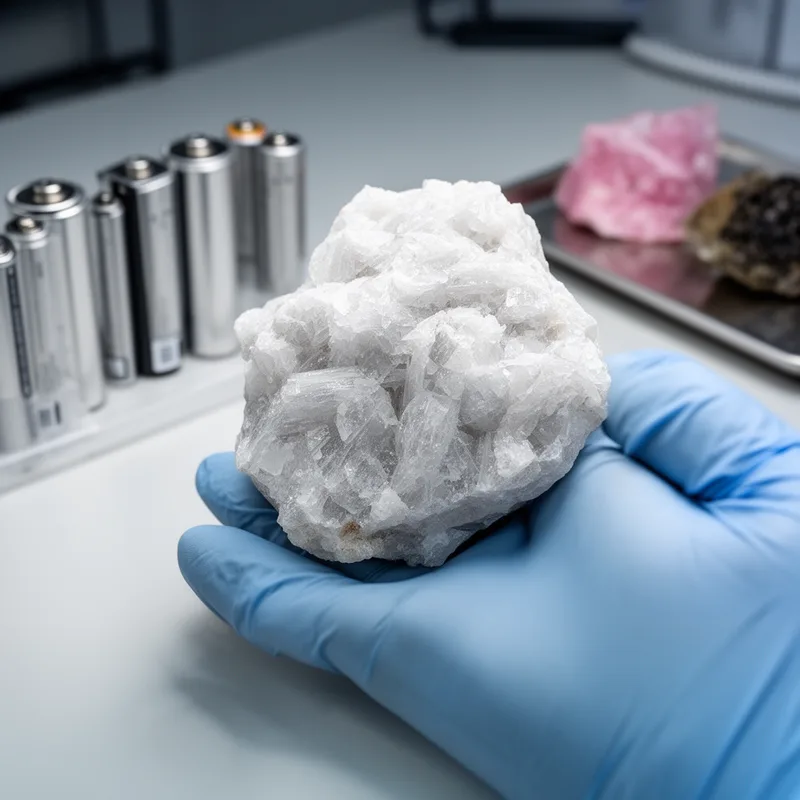
amblygonite
- noun
- /ˈæmbliɡəˌnaɪt/
- Specialized
- Large deposits of amblygonite have made the region an important source of lithium.
Examples
-
The geologist identified the specimen as amblygonite due to its characteristic pale color and structure.
-
Amblygonite is often found in granite pegmatites alongside other lithium-rich minerals.
-
The geologist identified the amblygonite in the rock sample.
-
Many amblygonites are found in pegmatite deposits.
-
Amblygonite is often found in granite pegmatites alongside other lithium-rich minerals.
-
Large deposits of amblygonite have made the region an important source of lithium.
-
The geologist identified the specimen as amblygonite due to its characteristic pale color and structure.
Surface Forms
Morphology
amblygonite = amblygon + ite
The components are Greek combining forms ('ambly-' 'gon-') not recognizable as independent English words to average learners; although '-ite' marks a mineral, the specific chemical meaning cannot be derived from the parts.
Etymology
The word amblygonite comes from the Greek parts amblys 'blunt' and gonia 'angle', plus the mineral ending -ite. It was named for crystals with 'blunt' or wide angles, so the name helps you remember that amblygonite is a pale mineral with a clear crystal shape and is used as a source of lithium.

