
allotype
- noun
- /ˈæl.əˌtaɪp/
- Specialized
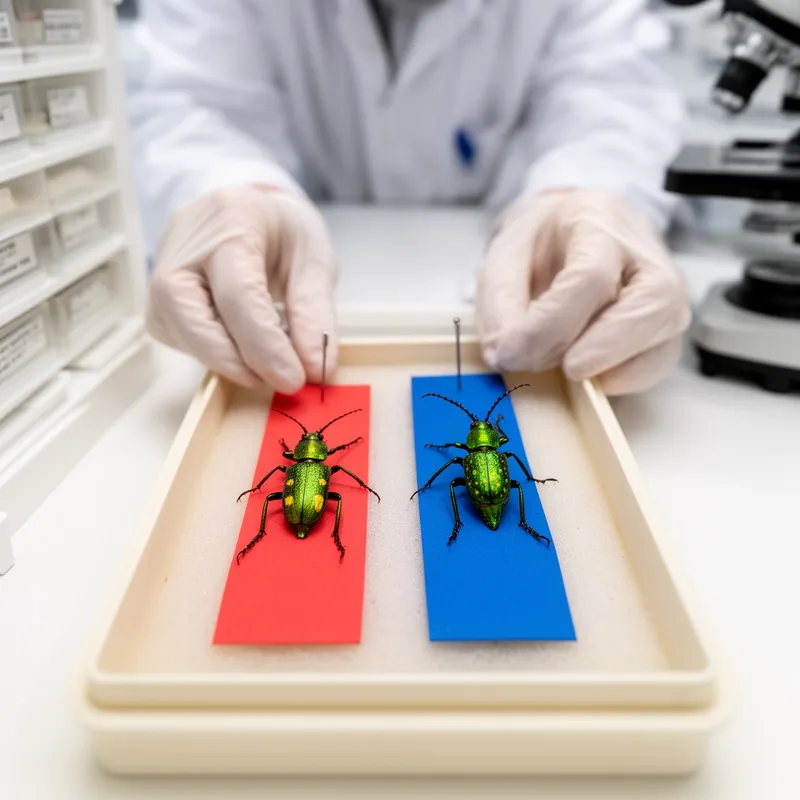
- Taxonomists often designate an allotype to provide a complete representation of both sexes.
Examples
-
The researcher selected a male allotype to accompany the female holotype in the species record.
-
In the museum collection, the allotype is stored alongside the holotype for reference.
-
The allotype was carefully examined by the researchers.
-
Can you identify the allotype in this specimen?
-
The researcher selected a male allotype to accompany the female holotype in the species record.
-
In the museum collection, the allotype is stored alongside the holotype for reference.
-
Taxonomists often designate an allotype to provide a complete representation of both sexes.
Surface Forms
Morphology
Etymology
Allotype comes from the parts allo- meaning 'other' and type meaning 'kind' or 'form'. In naming species an allotype is the specimen of the 'other' sex chosen to go with the main specimen, so it shows the opposite-sex form of that species.

