
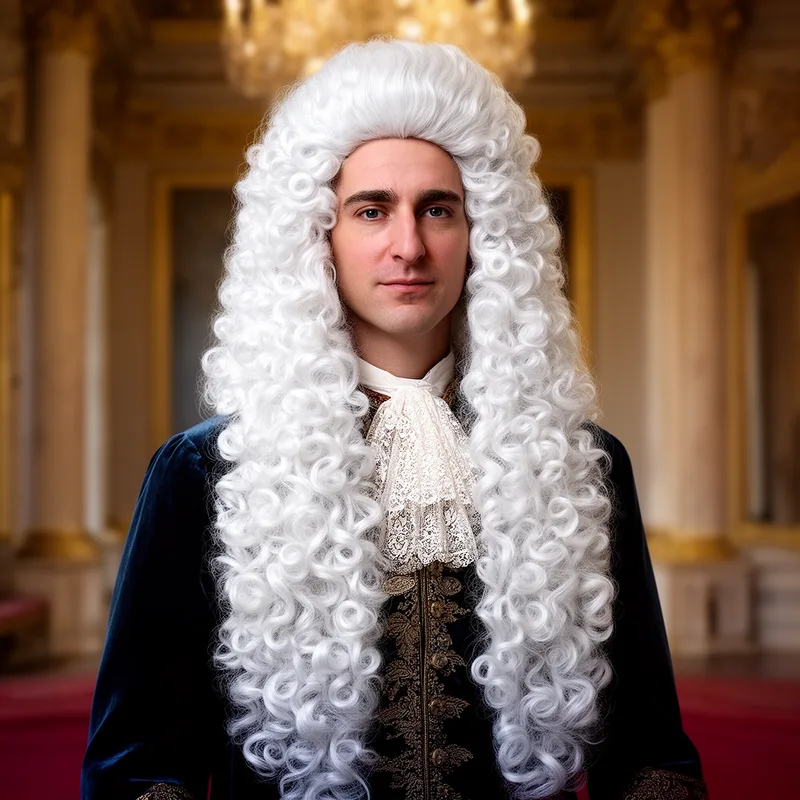
allonge
- noun
- /əˈlɒnʒ/
- Archaic
- In portraits of French nobility, the men often wore a grand allonge to display their status.
Examples
-
The museum's costume exhibit features an authentic allonge from the 18th century.
-
He completed his historical costume with a white allonge and a velvet coat.
-
He wore an elegant allonge to the gala.
-
The allonges of the nobility were quite extravagant.
-
In portraits of French nobility, the men often wore a grand allonge to display their status.
-
The museum's costume exhibit features an authentic allonge from the 18th century.
-
He completed his historical costume with a white allonge and a velvet coat.
Synonyms

 18
3.6
18
3.6

A piece of hair worn to hide baldness or change hairstyle


 1
9.9
1
9.9
A wig for men often worn by rich people and judges in the past
 1
9.9
1
9.9
A man's wig worn in the 1600s and 1700s
 1
9.0
1
9.0
A head covering made from horse hair that judges wear in court
Surface Forms
Etymology
Allonge for a wig comes from the French allonger meaning 'to lengthen' and is linked to the English long. The name fits because the allonge was a long, full wig that 'lengthened' a man's hair to show style and status.