
allelopathy


 1
9.9
- noun
- /ˌæl.əˈlɒp.ə.θi/
- Specialized
- Allelopathy was covered with the experimental population as well, but instead of defining and giving examples of the term, the students were asked to think of ways plants discourage other organisms from harming them.
- the role of allelopathy
- allelopathy's chemical effects
Loading YouTube…
Watch on YouTubeAnd I think that's called allelopathy, allelopathic.
- And I think that's called allelopathy, allelopathic.
Examples
-
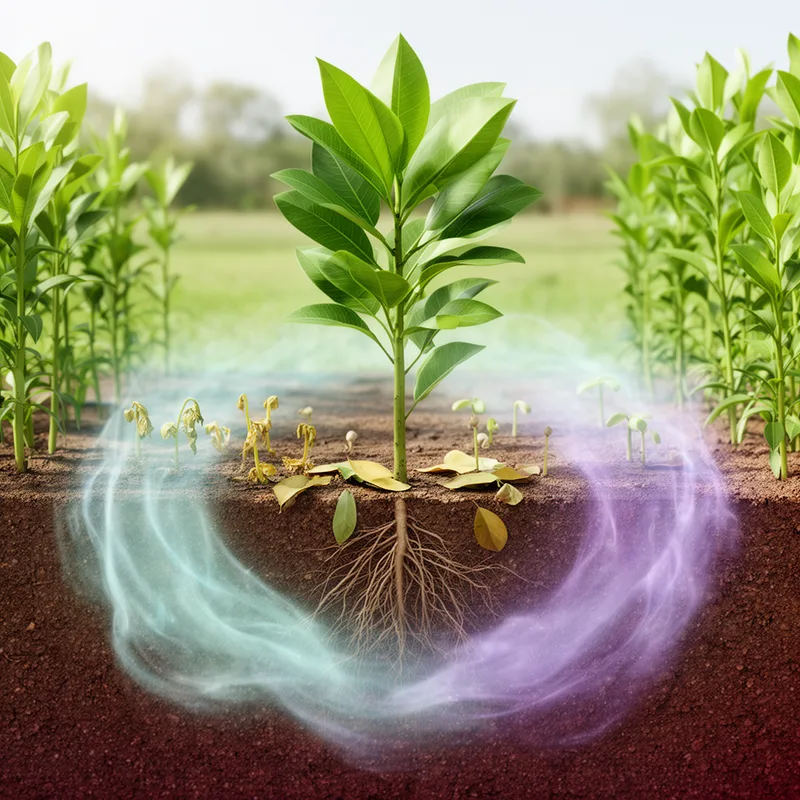
Some plants engage in chemical warfare, called allelopathy by ecologists.
-
There are several ways that gardeners can use a knowledge of allelopathy.
-
The term allelopathy was introduced after the idea of chemical defenses was suggested by the groups.
Academic text (1999) -
And I think that's called allelopathy, allelopathic.
-
Despite the fact that information on allelopathy was presented in the lecture for the control population, only 68% of the group correctly answered the question.
Academic text (1999) -
(d) allelopathy
Academic text (1999) -
Mechanisms that might explain this surprising outcome include N sequestering, allelopathy, and phenology that facilitates the growth of an annual plant (Sb).
Academic text (2001) -
Any of three mechanisms could lead to the reduction of whole-pot biomass by Tc: (1) direct competition for N, which reduces other species' growth; (2) allelopathy (negative chemical effects); or (3) indirect interactions that favor other species, which in turn reduce Sv biomass.
Academic text (2001) -
As the role of allelopathy becomes better understood, we may come to rely upon it as an everyday tool.
Surface Forms
Morphology
allelopathy = allel + pathy
The parts are specialized Greek combining forms (allel- 'mutual' and -pathy 'suffering/affection') that are not productive standalone English words, so an average learner cannot reliably derive the meaning from the components.
Etymology
Allelopathy comes from Greek parts allel- meaning 'each other' and -pathy meaning 'suffering' or 'feeling', the same ending you see in sympathy. So, allelopathy describes how one plant affects or sometimes harms other nearby plants by sending out chemicals, which is why the word means chemical influence between living things.