
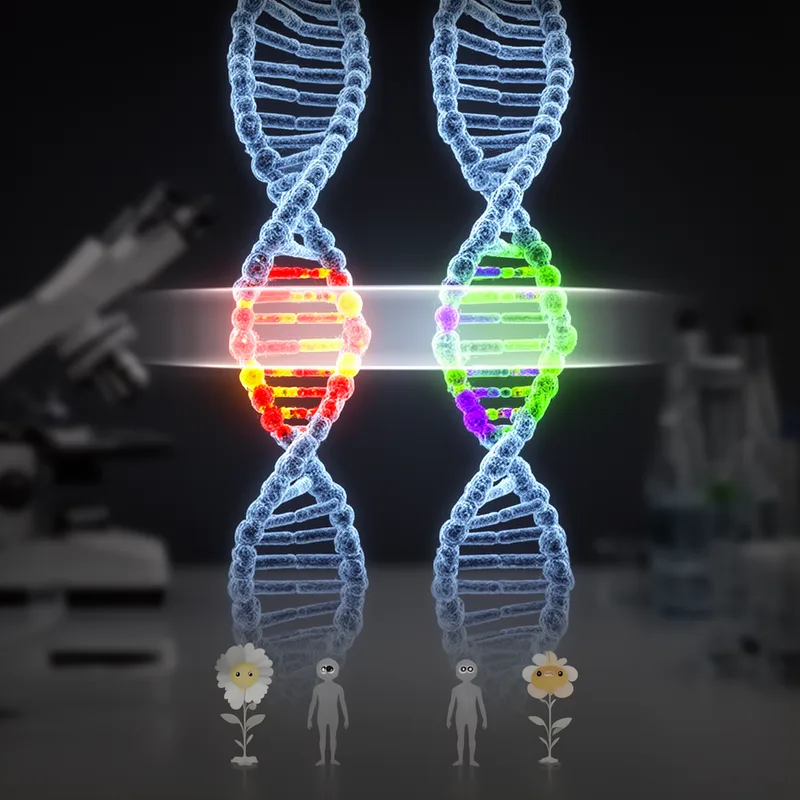
allelomorphic
- adjective
- /ˌæl.ə.ləˈmɔr.fɪk/
- Archaic
- The allelomorphic differences help explain variation in inherited traits.
Examples
-
Scientists discovered allelomorphic variations that influence the color of the flowers.
-
Researchers focused on allelomorphic variations in fruit flies.
-
Most genetic disorders arise from allelomorphic mutations at the molecular level.
-
Scientists observed allelomorphic changes within the gene pool of the species.
-
The allelomorphic traits of the plant were fascinating to study.
-
Most genetic disorders arise from allelomorphic mutations at the molecular level.
-
The allelomorphic differences among the plants were crucial to understanding their evolution.
Synonyms

 526
3.8

Relating to genes and how traits pass from parents to children
 1
9.9
Relating to different forms of a gene
 1
7.0
Relating to genes and how traits pass from parents to children


 1
8.7
Relating to the genes inside a person, plant, or animal
 1
9.0
Relating to the genes a living thing has rather than how it looks
Surface Forms
Morphology
allelomorphic = allelomorph (semi-transparent) = allelo + morph + ic
The step from the noun 'allelomorph' to the adjective by adding '-ic' is a regular and predictable adjectival formation.
Etymology
Allelomorphic comes from allel-, meaning 'of one another' and seen in the word allele, and -morphic, meaning 'shape', as in metamorphosis. So allelomorphic describes the different 'shapes' or forms of a gene, which is why it means something relating to genetic variants.