
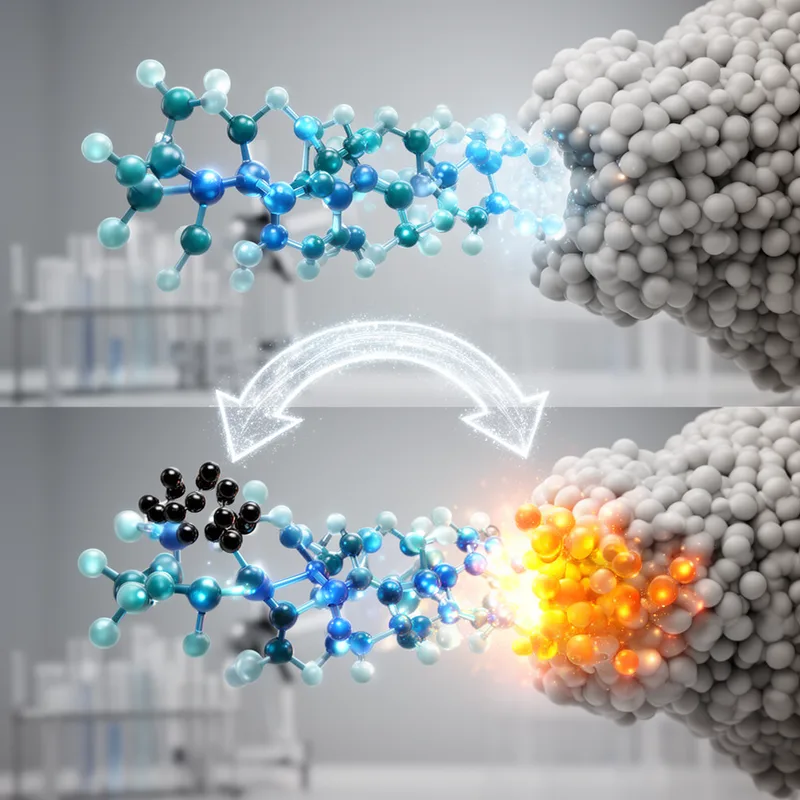
alkylation


 1
7.7
- noun
- /ˌæl.kɪˈleɪ.ʃən/
- Specialized
- Researchers studied how alkylation alters the structure of pharmaceutical compounds to improve their efficacy.
Examples
-
That poisoning seems to have a greater effect on cancer cells, because cancer cells divide more quickly than normal cells do, and the cell-killing effects of multiple DNA intercalations or alkylations kick in that much sooner.
Blog text (18) -
But if you have chapter bonds, they are indeed weakened by alkylation of the carbon, but no one understands it.
-
They've shown alkylation, Wittig, cycloadditions, even cross-coupling.
Blog text (21) -
So this is called the stork enamine alkylation and there's a much fancier kind of alkylation that was done in all these are in the same paper.
-
The process of alkylation modifies the chemical properties of the compound, enhancing its reactivity.
-
In organic chemistry, alkylation is crucial for synthesizing more complex molecules from simpler ones.
Surface Forms
Morphology
Etymology
The word alkylation comes from alkyl (the name chemists use for a small part of a molecule made of carbon and hydrogen, a close cousin of 'alcohol') and the ending -ation, which means 'a process'. So alkylation is the process of adding that carbon and hydrogen part to a molecule to change its shape or function.