
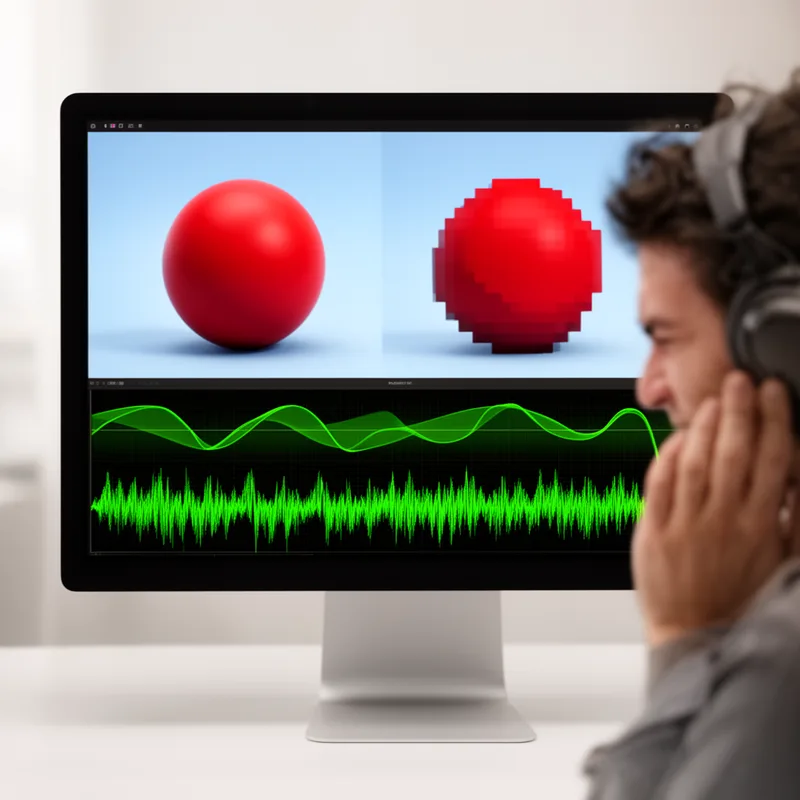
aliasing


 1
9.0
1
9.0
- noun
- /ˈeɪliəsɪŋ/
- Specialized
- The number of samples was chosen to minimize aliasing in the impulse response while keeping a reasonable computational burden.
Loading YouTube…
Watch on YouTubeAnd in particular, the interest was in suppressing high frequency content so that we can sample them without getting aliasing artifacts.
- And in particular, the interest was in suppressing high frequency content so that we can sample them without getting aliasing artifacts.
Examples
-
I am going to do a little demo on aliasing today that I didn't want you to miss.
-
Low-pass digital signal processing avoids aliasing for smooth, accurate results.
Academic text (2011) -
That blur, that aliasing, the lack of any definition.
Blog text (2) -
Low-resolution image sensors have a problem called "color aliasing" that occurs when a spot of light in the original scene is only big enough to be read by one or two pixels.
Academic text (2001) -
Sure, there may be some aliasing and moiré seen under specific conditions, but that is predictable and can be controlled.
Blog text (14) -
Consequently, film seldom has the aliasing problems we associate with periodic spatial sampling of a visual scene with comparable spatial periodicity.
Academic text (1992) -
One also gets moiré patterns and other such aliasing artifacts when the spatial frequency of the scene exceeds the sampling frequency of the pixel array.
Academic text (1992) -
The aliasing and color gradients on a screen like this just do not work in HD.
-
Low-pass digital signal processing avoids aliasing for smooth, accurate results.
-
Low-resolution image sensors have a problem called "color aliasing" that occurs when a spot of light in the original scene is only big enough to be read by one or two pixels.
Synonyms
 53
6.7
53
6.7
A change in a sound or electrical signal that makes the sound wrong
 12
7.2
12
7.2
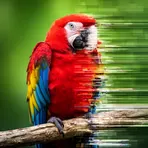
A strange error in a photo, video or audio file caused by processing
How Distorted
- Specialized
1
9.0

- Specialized
12
7.2
Surface Forms
Morphology
Etymology
The word aliasing comes from alias, a word that means 'other' or 'another name'. In images or sound, a real detail can appear as a false 'other' shape or tone when the picture or sound is recorded with too little detail, so aliasing is the wrong or 'other' version of the original signal.