
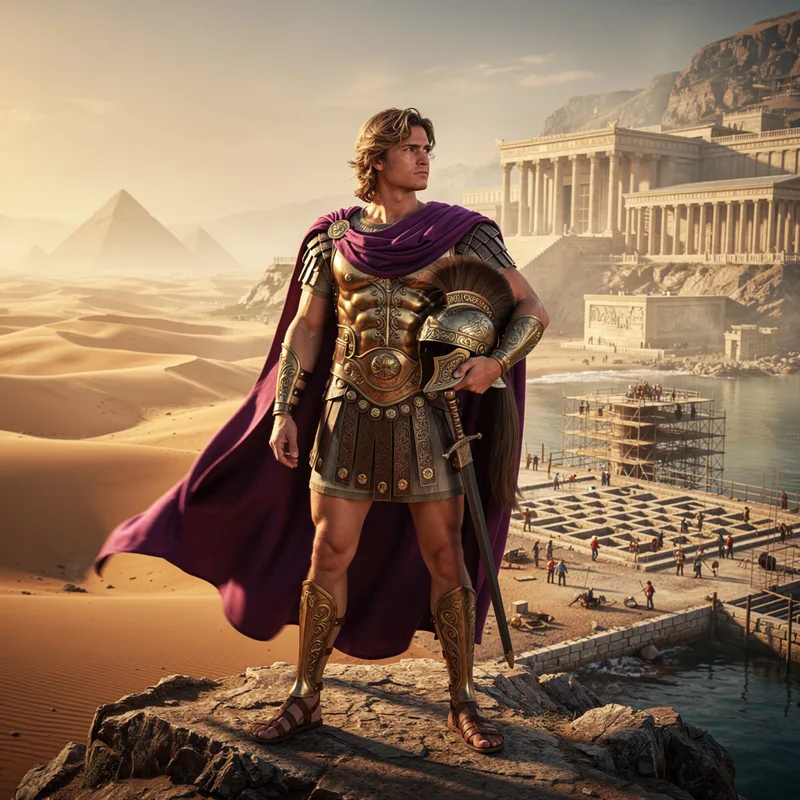
Alexander
 ∞
5.5
∞
5.5

- proper noun
- /ˈælɪɡˌzændər/
- But since Alexander the Great invaded Egypt, it's now dominated by a new, Greek elite.
- Alexander the Great
Loading YouTube…
Watch on YouTubeWhere is the tomb of Alexander the Great now Alexandria?
- Where is the tomb of Alexander the Great now Alexandria?
- And so that gets me to Alexander the Great's last three wishes.
- Just like Alexander the Great, he cried.
- But bloody Alexander the Great found out about him.
Examples
-
Where is the tomb of Alexander the Great now Alexandria?
-
With his plans in place, Alexander's force prepared to cross.
-
Just like Alexander the Great, he cried.
-
This is the story behind Alexander's body and his tomb.
-
And so that gets me to Alexander the Great's last three wishes.
-
Conquered by Alexander in 328 B.C.
-
He will now mount an intense campaign against Alexander's rule from abroad.
-
Additionally, the Pseudo-Aristotle, purportedly written by Aristotle for Alexander the Great, was an advice book for rulers.
Academic text (2013) -
They'd conquered all of Alexander the Great's successor kingdoms.
-
Many historical texts discuss the achievements of Alexander, emphasizing his conquests.
Synonyms
 4
4.9
4
4.9
A king of Macedonia who conquered Greece, Egypt, and Persia
Compounds


A group of islands off southeast Alaska that lie along its narrow coastal strip

A pope known for a controversial papacy and father of Cesare and Lucrezia Borgia
Surface Forms
Etymology
Alexander comes from the Greek name Alexandros, made of alex- meaning 'to defend' and -andros meaning 'man', so it means 'defender of men'. That's why the famous Alexander was a military leader and why many cities called Alexandria were named for him.