
albite


 1
9.9
- noun
- /ˈælˌbaɪt/
- Specialized
- These include serpentinite, certain quartz rocks (notably chrysoprase and fuchsite jasper), and green albitite (albite rock, a transformation of jadeitite).
Examples
-
As to the rarity of sodium in meteorites, they do contain traces of albite, a feldspar that contains sodium.
Academic text (1996) -
Blue-green jade artifacts contain slightly iron-enriched jadeite, a fair amount of titanite, and albite, all typical for the range of minerals found in the Guatemalan rocks.
Academic text (1992) -
The key minerals for jade from the primary Motagua Valley source are jadeite, omphacite, albite, white mica (two varieties), and titanite.
Academic text (1992) -
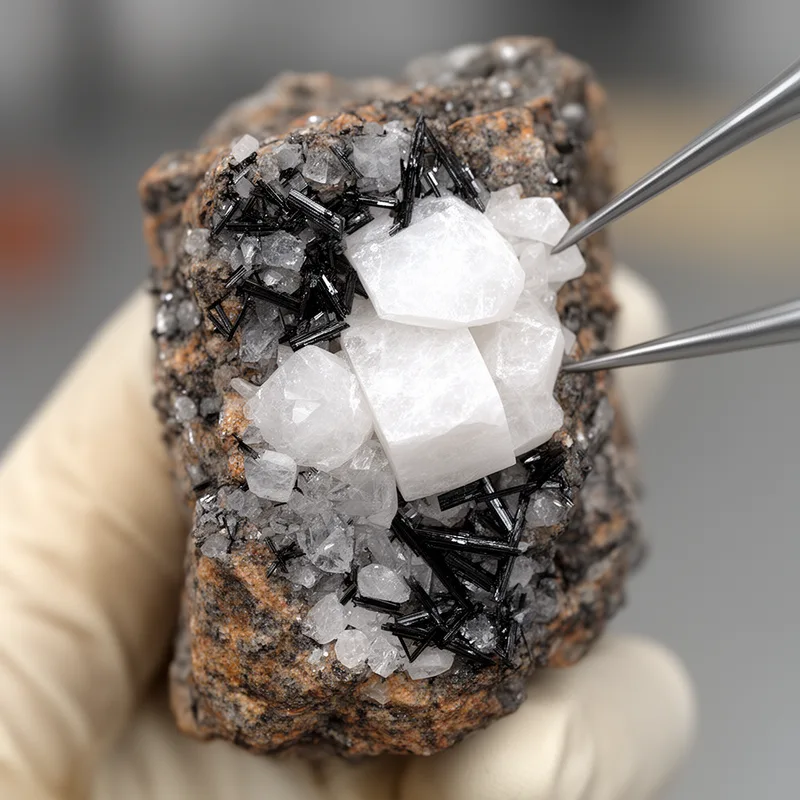
The white material is a mixture of the mineral albite, a plagioclase feldspar with a composition of Na (AlSi3O8), and lesser amounts of quartz (SiO2).
Blog text (21) -
The white mineral known as albite is commonly found in granite, contributing to its light color.
-
Geologists often identify albite in rock samples because of its distinctive pale appearance.
-
In the study of metamorphic rocks, albite is recognized for its presence alongside more common minerals like quartz.
Synonyms
 2
9.0
A hard mineral found in many rocks like granite

A common white mineral that is in many rocks
Surface Forms
Morphology
albite = alb (opaque) = alb + ite
Although the suffix '-ite' signals a mineral, the root 'alb' is not a productive standalone English word and the term is technical, so learners cannot reliably derive the meaning.
Etymology
The word albite comes from the Latin root alb- meaning 'white' and the mineral ending -ite. So it is named for its pale or white color, and you can see the same root in albino.