
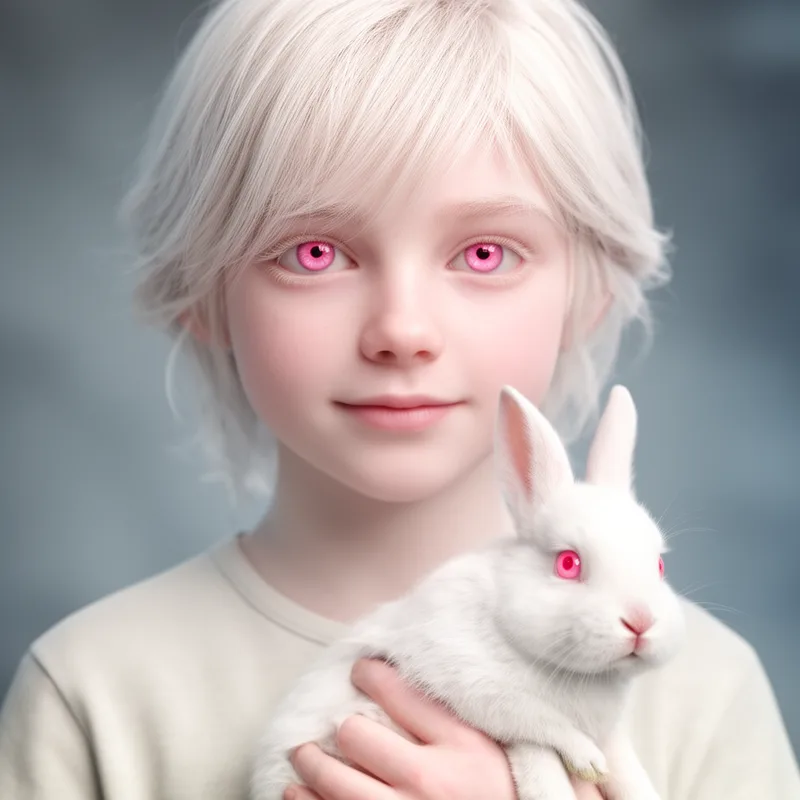
albinistic
- adjective
- /ælˈbɪnɪstɪk/
- Specialized
- The albinistic rabbit had pure white fur and pink eyes.
Examples
-
Many albinistic animals are sensitive to sunlight.
-
Researchers studied the albinistic traits in several animal species.
-
Her brother was born with albinistic features, including pale skin and light hair.
-
The albinistic rabbit was easily spotted in the snow.
-
The albinistic rabbit had pure white fur and pink eyes.
-
Her brother was born with albinistic features, including pale skin and light hair.
-
Many albinistic animals are sensitive to sunlight.
Synonyms
 11
6.9
11
6.9

Having very little color in skin, hair, and eyes

Having very pale skin, hair, or eyes because the body makes little natural colour

Having very pale skin and hair and light or pink eyes because the body makes little colour
Having very pale skin, hair, or eyes because the body does not make colour
Surface Forms
Morphology
albinistic = albinism (transparent) = albin + istic
Formed by adding the productive adjectival suffix '-istic' to the noun 'albinism' (analogous to 'altruism' → 'altruistic'), so the meaning directly relates to albinism.
Etymology
Albinistic comes from the Latin root albus, meaning 'white', and shares this root with common words like albino and album. So albinistic describes people or animals with very pale skin, hair, or eyes because they have little natural colour.