
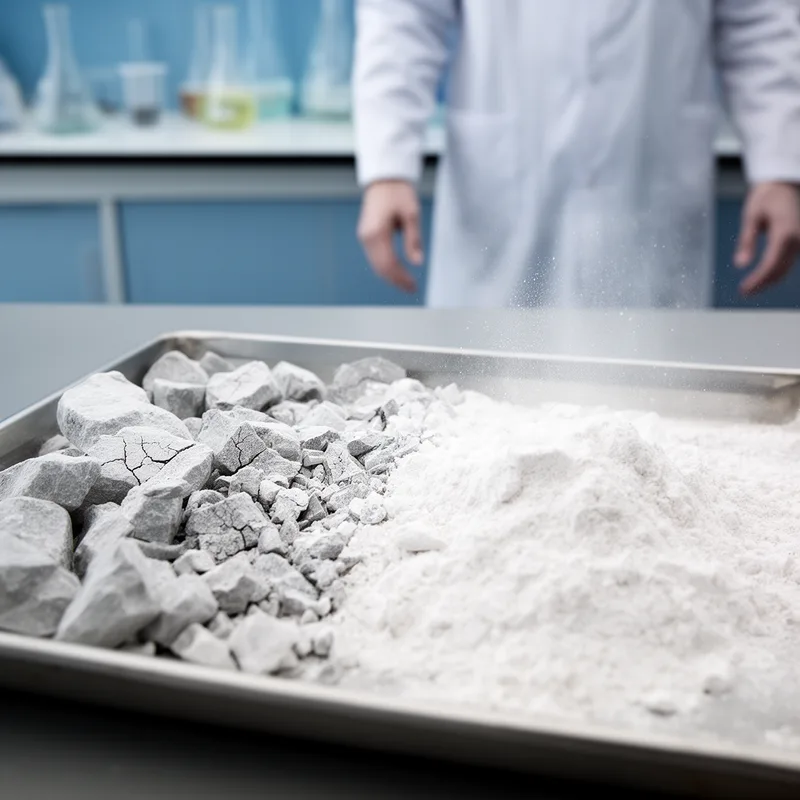
to air-slake
- verb
- Archaic
- The lime will air-slake after being exposed to moisture.
Examples
-
If you air-slake quicklime, it turns into a powdery substance.
-
The process to air-slake lime must be carefully controlled to avoid excessive reaction.
-
Chemists often air-slake samples before further testing them.
-
To improve quality, we need to air-slake the lime properly.
-
To create a strong mortar, you should air-slake the lime before mixing it with sand and water.
-
The quicklime must air-slake in the open air to transform into a more stable form.
-
After the field test, the team decided to air-slake the lime samples to analyze their properties.
Surface Forms
Morphology
Etymology
Air-slake joins air and slake, and slake means 'to make less strong' or 'to quench'. So to air-slake something is to let the air 'work on' it and change it, which is why quicklime left in the open air slowly breaks down into a powdery form.

