
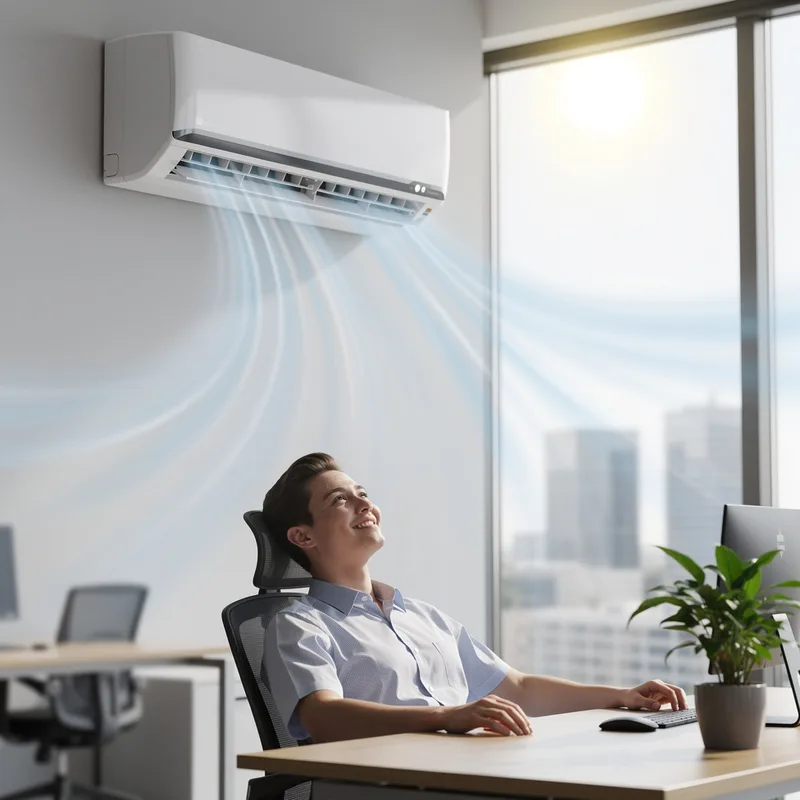
to air-condition
 7
3.5

- verb
- /ˈɛr kənˌdɪʃən/
- It's important to air-condition the building to maintain a pleasant environment for everyone inside.
- air-condition a room
Loading YouTube…
Watch on YouTubeEven IBM customers won't be able to afford to buy, let alone air condition, one of these mainframes per programmer.
- Even IBM customers won't be able to afford to buy, let alone air condition, one of these mainframes per programmer.
Examples
-
If your home isn't air conditioned, find a place that is and go there.
Blog text (30) -
You don't need to air condition the whole building," Radermacher said.
Academic text (2007) -
We do live in a very warm climate; however, our offices are air conditioned.
Blog text (15) -
You'd think they could air-condition the place, you know?
-
They thought, "Oh, I know, we'll air-condition these big theaters."
-
Boy, you'd think they'd at least air-condition these places.
-
That may be the compromise between wanting them and having to air-condition all those aging buildings, if it's true.
Blog text (26) -
By law—strictly enforced, all accommodations must be air conditioned.
Blog text (15) -
The technician will air-condition the office to make it more comfortable during the summer.
-
We decided to air-condition the living room so we could enjoy watching movies without overheating.
How Cold

Surface Forms
Morphology
Etymology
Air-condition comes from the words air and condition, where condition means 'state' or 'to make right'. So to air-condition a room is to put the air into the right 'state' — the right temperature and humidity — to make people comfortable.