
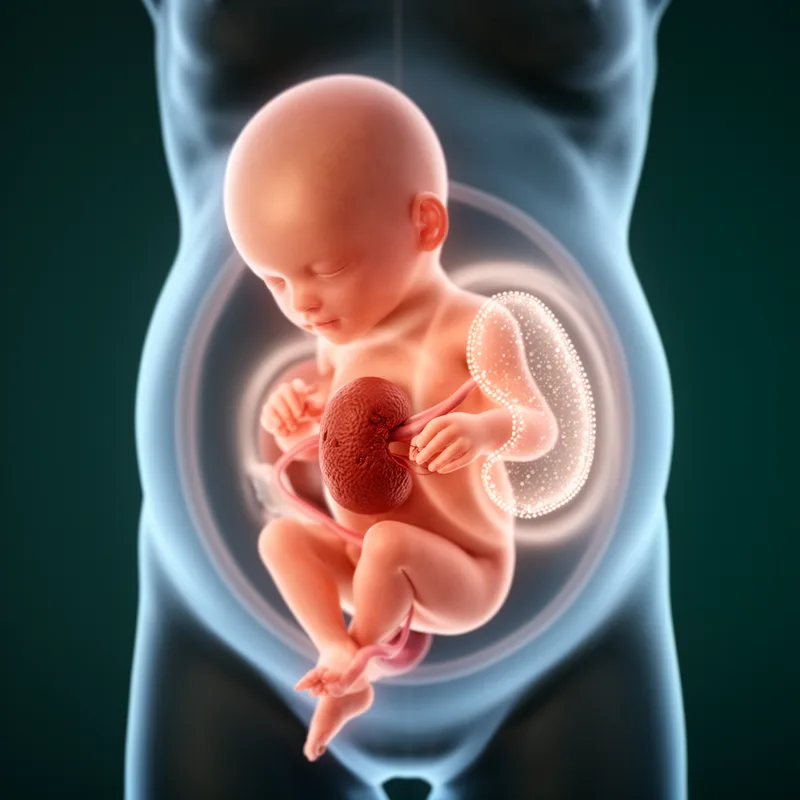
agenesia
- noun
- /ˌeɪdʒəˈniːziə/
- Specialized
- The baby was diagnosed with agenesia of the left kidney, meaning it did not develop properly before birth.
Examples
-
We applied the titanium implantation technique for two main anatomical indications: bilateral agenesia of the ear and chronic otitis.
Academic text (1998) -
The use of the laser is particularly important in cases with a partially fixed footplate or agenesia of the annular ligament, which both give rise to the phenomenon of the small air-bone gap.
Academic text (1996) -
A child may face physical challenges due to agenesia of the limb, necessitating support for mobility.
-
Doctors explained that agenesia can refer to the complete absence of a body part, like a missing finger.
Synonyms

A condition when a person does not have a body part from birth because it did not develop

A lack of normal growth in a person, animal, or system
Antonyms


Surface Forms
Morphology
Etymology
Agenesia comes from the Greek parts a- meaning 'without' and genesis meaning 'origin' or 'birth', the same root you see in genetic and genesis. So agenesia is used for a body part that did not form or failed to develop.