
aftertouch
- noun
- /ˈæftərˌtʌʃ/
- Specialized
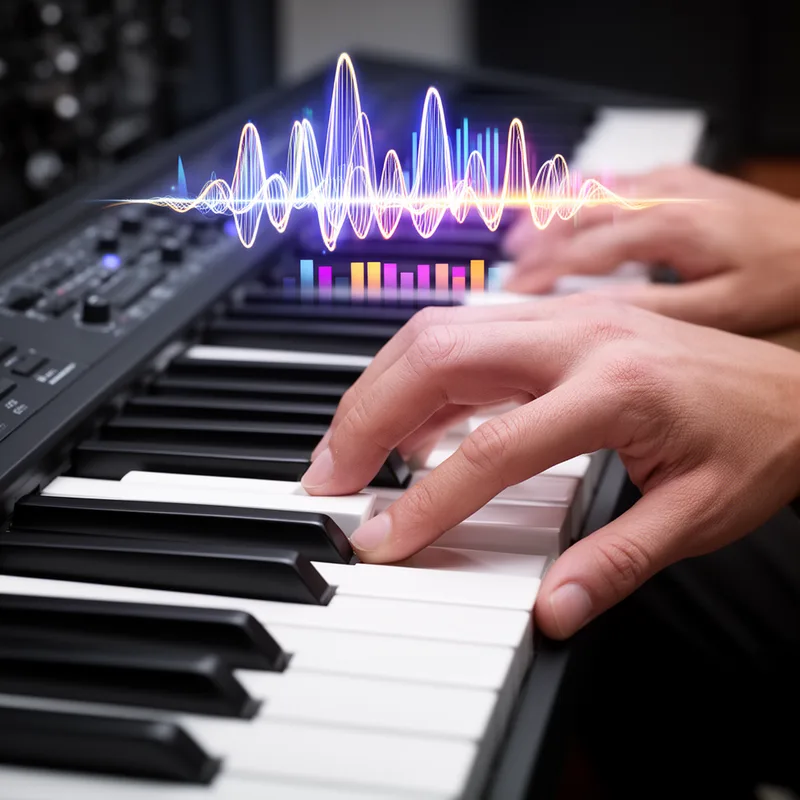
- Aftertouch can therefore be used to change many aspects of a sound, including the volume level, the filter cutoff, or the degree of modulation (often used to control vibrato).
- aftertouch or pressure
Examples
-
The keyboard's aftertouch feature lets you modify the sound's volume by applying additional pressure.
-
Many synthesizers' aftertouch functionality enhances musical expressiveness during performances.
-
There are two types of aftertouch: channel pressure and key pressure.
Academic text (1994) -
Aftertouch effects are reserved for the serious synthesist.
Academic text (1994) -
Other capabilities available with some electronic instruments include aftertouch or pressure sensing.
Academic text (1994) -
"Performance information (velocity, aftertouch, pitch bend, and control change) will also be sent from the keyboard to the sound module.
Academic text (1994) -
Aftertouch (also called pressure sensitivity or second touch) is a measurement of the pressure exerted on the key after it is depressed.
Academic text (1994) -
With aftertouch, musicians can control sound effects through pressure applied after pressing a key.
Surface Forms
Morphology
Etymology
The word aftertouch comes from the simple parts after ('later') and touch ('press' or 'feel'), and it means the pressure you put on a key after you press it. That's why aftertouch on a keyboard lets a player change the sound, like adding vibrato or volume, by pressing harder while holding a note.

