
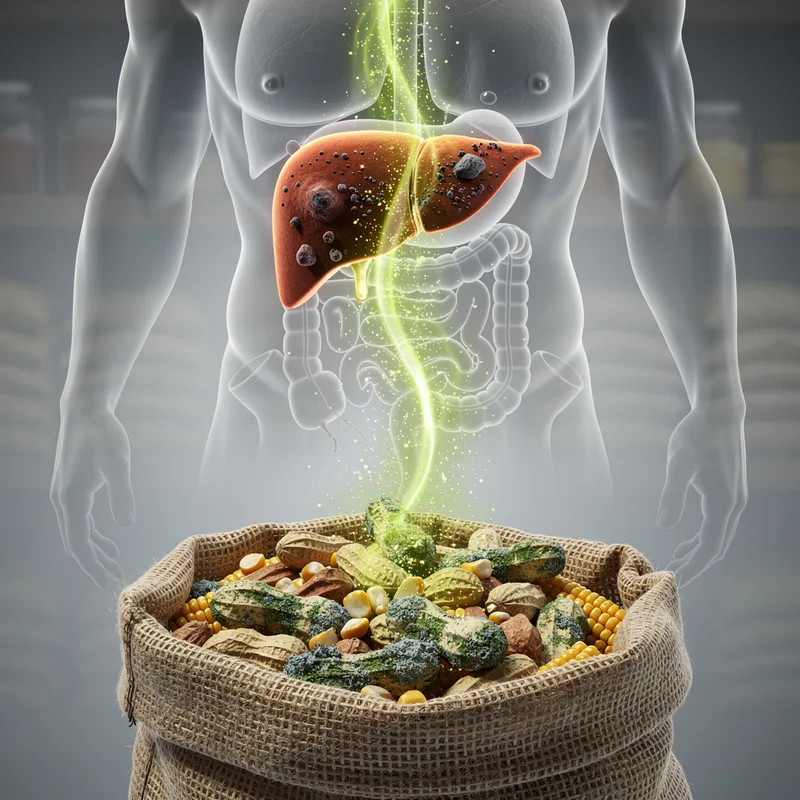
aflatoxin
 3
9.9

- noun
- /ˌæfləˈtɒksɪn/
- Specialized
- A codon 249 mutation of the p53 gene identifies an endemic form of HCC strongly associated with dietary aflatoxin intake.
- aflatoxin intake
- aflatoxin exposure
- aflatoxin B1
Examples
-
In England, thousands of turkeys died of acute liver failure in the 1960s when fed aflatoxin-contaminated peanut meal from Brazil.
-
Both HBV and aflatoxins are suspected risk factors for HCC in all of these countries.
Academic text (1991) -
And the mold produces the substance aflatoxin.
-
The risk of dietary aflatoxin intake is generally high, but varies between countries.
Academic text (1991) -
The only known difference between these two populations is in their risk of exposure to aflatoxins.
Academic text (1991) -
Contamination of food with large quantities of aflatoxins is an important health issue in Mozambique.
Academic text (1991) -
One mycotoxin that ARS researchers are keenly interested in is aflatoxin—named for the A. flavus fungus that makes it.
Academic text (2006) -
Contamination of food with large quantities of aflatoxin is an important health issue in Mozambique.
-
Experts say it's likely the aflatoxin came from corn a company used in its feed that had developed a fungus.
Synonyms
 2
7.9
A poisonous substance made by a living thing like a plant, animal, or germ
 1
9.7
A poison made by some molds that can get into food or animal feed
Surface Forms
Etymology
Aflatoxin comes from the mold name Aspergillus flavus, where flavus means 'yellow', plus the word toxin ('poison'). So an aflatoxin is a poisonous substance made by that mold, which is why it can spoil stored food and harm health.