

adzuki bean
- noun
- /ædˈzuːki/
- Many East Asian recipes include adzuki beans, which provide a unique flavor and additional nutrition.
- rice and adzuki beans
Examples
-
Get me a Lava Lychee with adzuki beans and extra pinipig.
-
She was eating rice mixed with red adzuki beans and, in a sickening way, it did look like blistered skin.
Fiction book (1997) -
In Japan, adzuki beans are often used to make sweet red bean paste for desserts.
-
You might see adzuki beans featured in various dishes, from soups to pastries, enhancing their taste.
Synonyms
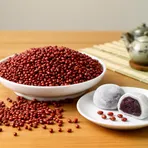
A small reddish-brown bean used in Chinese and Japanese cooking, often in sweet dishes

A bushy plant grown in East Asia for its small red beans used for food

A bushy plant grown for edible seeds called adzuki beans used in Chinese and Japanese cooking
Surface Forms
Morphology
adzuki + bean
The compound follows a clear noun+noun pattern where the first element names a variety and the second is the general class 'bean', so a learner who knows both constituents will understand it denotes a type of bean. Although the specific properties (reddish color, East Asian culinary use) are not inferable from the label alone, the basic meaning 'a kind of bean called adzuki' is transparently compositional and cross-linguistically familiar.
Etymology
Adzuki bean comes from the Japanese word azuki, which literally means 'small red bean'. These small reddish-brown beans have long been used in East Asian sweets and pastes, so today the name refers to that tiny red bean often used in desserts.

