
adoptionism


 1
9.9
- noun
- /əˈdɑpʃənˌɪzəm/
- Formal
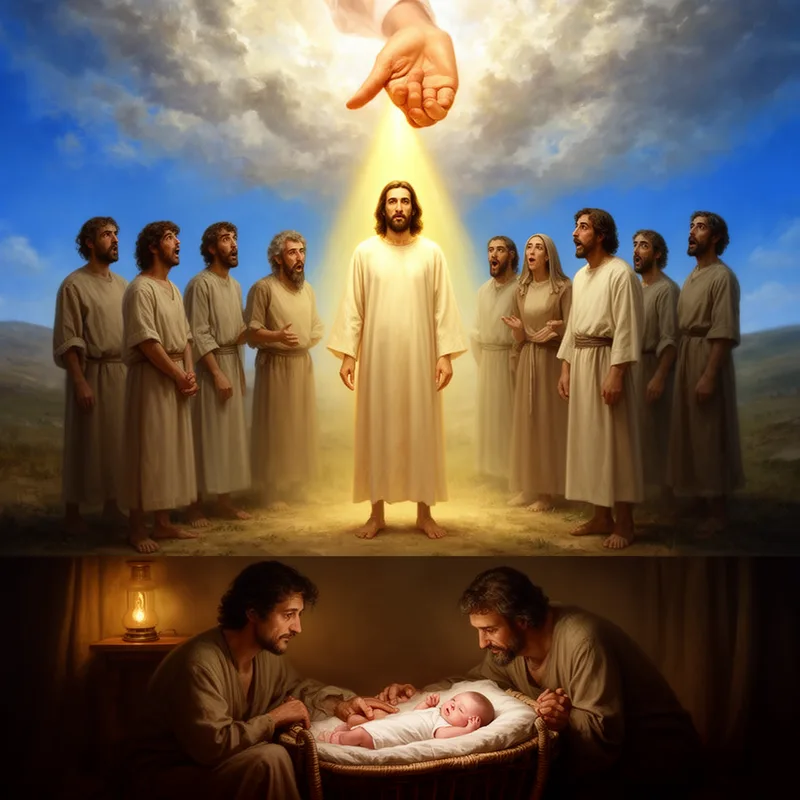
- Early church leaders grappled with the concept of adoptionism, questioning whether Jesus was born divine or adopted by God.
Examples
-
The route from Jesus to Christ does not, however, exclude a movement "from above"; far from being at odds, adoptionism and "incarnational" Christology are, in Macquarrie's judgment, complementary and equally necessary (373).
Academic text (1991) -
It is this indwelling of the Spirit from the very first that is said to separate this Christology from adoptionism (277).
Academic text (1992) -
and was taught throughout the Middle East by Arias as "adoptionism."
Blog text (23) -
Intimately connected with this are the problems of adoptionism and subordinationism.
Academic text (1990) -
Which, of course, is another way of formulating Adamic adoptionism.
Academic text (1991) -
The debate surrounding adoptionism has significant implications for understanding the nature of Christ in Christian theology.
-
Adoptionism suggests that Jesus became the Son of God through a form of divine selection rather than an inherent divine nature.
Surface Forms
Morphology
Etymology
Adoptionism comes from adopt, which originally meant 'to choose' and today means to 'take as one's own' like when a family adopts a child, plus the ending -ism meaning 'a belief'. So adoptionism is the belief that Jesus was 'taken in' or 'adopted' as the Son of God rather than being divine by nature.