
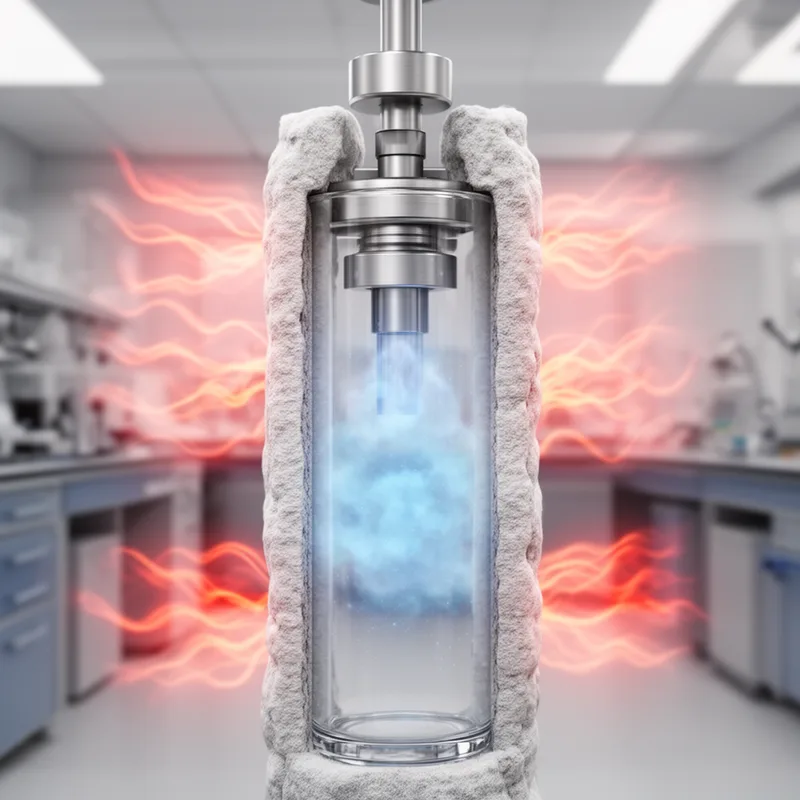
adiabatically


 1
9.9
- adverb
- /ˌeɪdiəˈbætɪkli/
- Specialized
- I take a gas that is adiabatically isolated from its environment.
Examples
-
When the air rises adiabatically, it cools and forms clouds.
-
So by compressing 3He adiabatically, you can transform some of the 3He from liquid to solid, thus lowering the temperature of the mixture.
Academic text (1996) -
One result is that most of the convection zone is indeed adiabatically stratified, as had been expected.
Academic text (1995) -
The atmosphere in this model is effectively a gas column in an adiabatically bound state; heat conduction throughout the column will lead to an equilibrium of constant temperature distribution.
Blog text (18) -
So relatively dry regions of the atmosphere are indicative of descending currents, which adiabatically warm and thereby lower their relative humidity (e/es).
Academic text (2012) -
If the spins are separated adiabatically—that is, slowly enough to let B nuc torque the spins—they'll settle into their ground state?
Academic text (2006) -
The katabatic winds warm adiabatically as they descend from the ice sheet, whereas the coastal breezes tend to be cool as they advect into the valley from the ice-covered McMurdo Sound.
Academic text (1999) -
The gas expanded adiabatically, causing its temperature to drop significantly.
-
In an adiabatic process, no heat is exchanged between the gas and its surroundings.
Surface Forms
Morphology
Etymology
Adiabatically comes from Greek parts a- meaning 'not' and diabatos meaning 'pass through', so it literally means 'not letting something pass through'. That's why in physics adiabatically describes a process where no heat passes into or out of a system.