

adhesive agent
- noun
- /ədˈhiːsɪv ˈeɪdʒənt/
- An adhesive agent is essential for mounting dental crowns securely in the mouth.
Examples
-
Scientists developed a new adhesive agent that works even on wet surfaces.
-
The adhesive agent worked perfectly to bond the two surfaces.
-
The tiles were fixed in place using a strong adhesive agent that dried within hours.
-
Many adhesive agents are used in construction.
-
The carpenter applied an adhesive agent to ensure the pieces of wood stayed together during assembly.
-
In art restoration, specialists often use a strong adhesive agent to repair fragile pieces without damaging them.
-
For the project, we selected an adhesive agent that works well with both plastic and metal materials.
Synonyms

 214
1.0
214
1.0

A sticky substance used to join things together
 30
3.6
30
3.6
A sticky substance used to join two things together
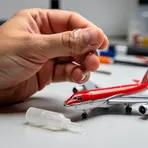 5
3.3
5
3.3
A very strong glue that joins things quickly and stays joined
 3
3.9
3
3.9
A thing that makes materials stick together, for example in paint or food
 1
2.8
1
2.8
A very strong sticky liquid that joins things quickly


 1
3.4
1
3.4
A sticky substance like glue that holds two surfaces together
 1
5.4
1
5.4
A thick glue-like substance that clings to things and makes a mess
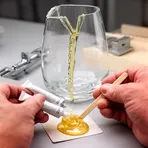
A very strong glue made by mixing two parts to join hard materials like metal or glass

A strong sticky substance from milk that joins pieces of wood

A material used to make two things stick together
Antonyms


Surface Forms
Morphology
The meaning is directly and compositionally derived from 'adhesive' (a substance for sticking) and 'agent' (a thing/substance that produces an effect), so a learner who knows both words can infer it refers to a substance that causes adhesion. This noun–noun composition is transparent and cross-linguistically common, making it readily understandable to a B1 learner.
Etymology
Adhesive agent: The noun adhesive agent comes from a simple idea: adhesive means 'sticky' and agent means 'one that acts'. So an adhesive agent is literally something that 'does the sticking', which is why it means a material used to join surfaces together.