
adaptationist
- adjective
- /ˌædæpˈteɪʃənɪst/
- Specialized
- It has consistently been a chief venue for adaptationist work in literature and aesthetics.
- adaptationist explanation
- adaptationist study
- adaptationist research
Examples
-
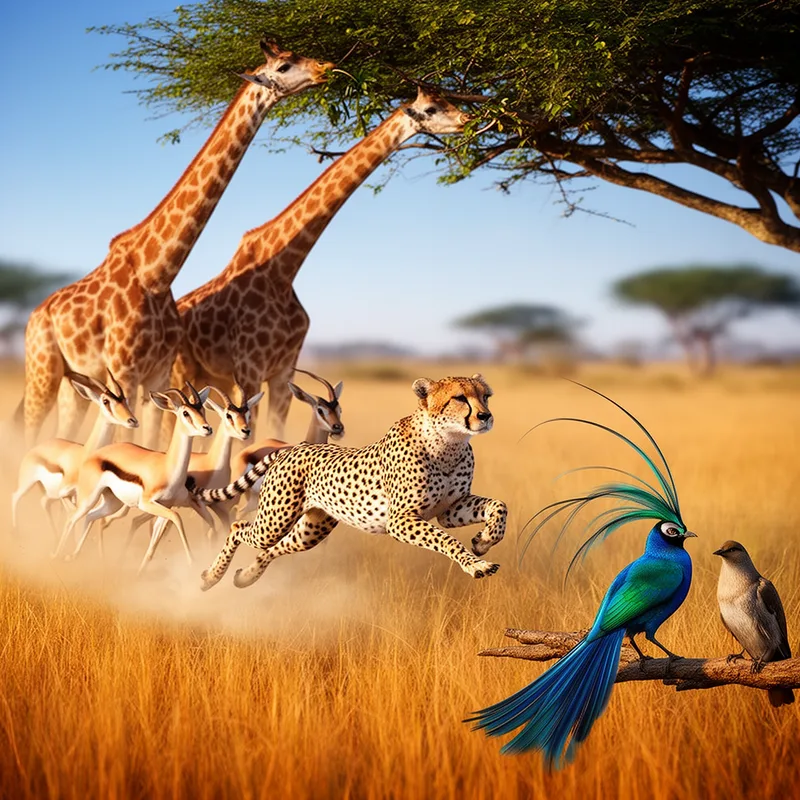
Researchers in evolutionary biology often present an adaptationist view, arguing that many traits exist primarily to enhance survival chances.
-
Adaptationist social scientists identify "the adapted mind" as the foundation of human culture.
Academic text (2002) -
Unfortunately, I think the authors tackle the problem from an adaptationist perspective and do not give alternative hypotheses due consideration.
Blog text (13) -
Adaptationist literary scholars concur, and they seek to bring literature itself within the field of cognitive and behavioral features susceptible to an adaptationist understanding.
Academic text (2002) -
Human Nature is grounded in anthropology, but like most adaptationist science, it blurs the boundaries between anthropology and psychology.
Academic text (2002) -
Many theories in evolutionary psychology are grounded in an adaptationist approach that emphasizes traits developed for reproductive success.
-
The documentary explored the adaptationist perspective on animal behaviors, illustrating how these traits help species thrive in their environments.
Synonyms
 14
6.2
14
6.2

About the idea that living things change over time by natural selection
 1
8.2
1
8.2
Relating to modern evolution theory that explains change by genes and groups of animals or plants
Connected with Charles Darwin's idea that living things change over time by natural selection
Surface Forms
Morphology
adaptationist = adaptation (semi-transparent) = adapt + ation + ist
Formed by the transparent, productive suffix '-ist' added to 'adaptation', but the term is specialized in evolutionary theory which may limit naive inference.
Etymology
Adaptationist comes from adapt ('to make fit') plus -ation (a thing) and -ist ('one who believes or does something'). As an adjective, it describes the idea that traits or behaviors evolved because they were 'fits' that helped animals survive or have babies.