
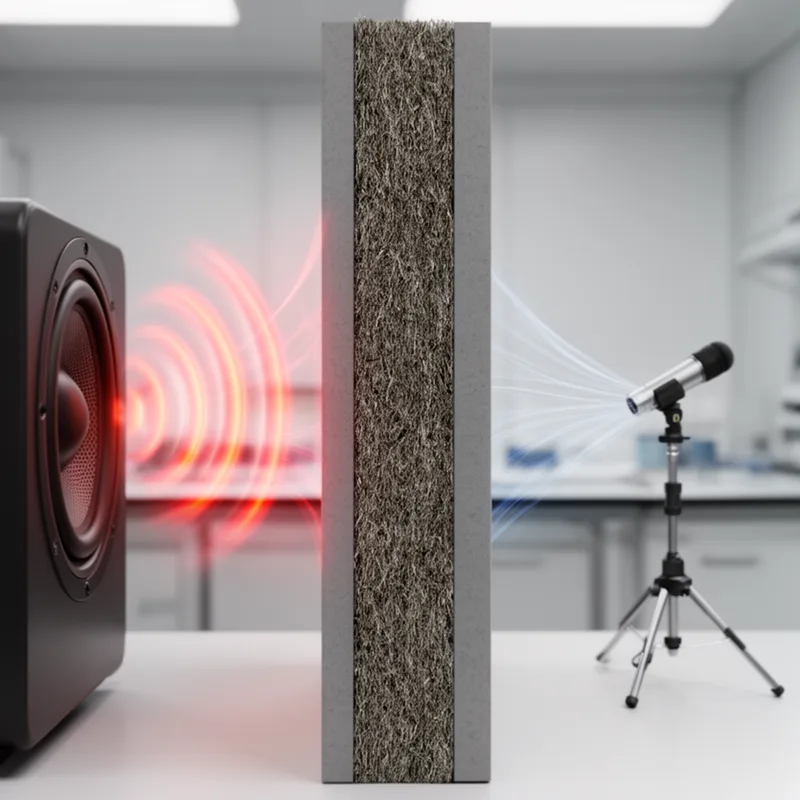
acoustic resistance
- noun
- /əˈkuːstɪk rɪˈzɪstəns/
- Specialized
- The acoustic resistance of this material helps reduce noise transmission through the walls.
Examples
-
Engineers measured the acoustic resistance to determine the sound absorption properties of the panel.
-
High acoustic resistance can lead to sound absorption.
-
Increasing acoustic resistance can improve the efficiency of certain types of microphones.
-
The acoustic resistance of the material affects sound quality.
-
Engineers measured the acoustic resistance to determine the sound absorption properties of the panel.
-
The acoustic resistance of this material helps reduce noise transmission through the walls.
-
Increasing acoustic resistance can improve the efficiency of certain types of microphones.
Surface Forms
Morphology
The meaning 'opposition to the flow of sound' is directly compositional from 'acoustic' (relating to sound) and 'resistance' (opposition to flow), so a learner who knows both constituents can infer the compound meaning. This is a standard descriptive noun phrase used in technical contexts and follows transparent cross-linguistic logic, making it accessible to B1 learners familiar with the component words.
Etymology
Acoustic resistance paints a simple picture: imagine acoustic means 'sound' and resistance is something that slows a flow, like a sponge in water. That's why acoustic resistance means how much a material or surface makes the flow of 'sound' harder.

