
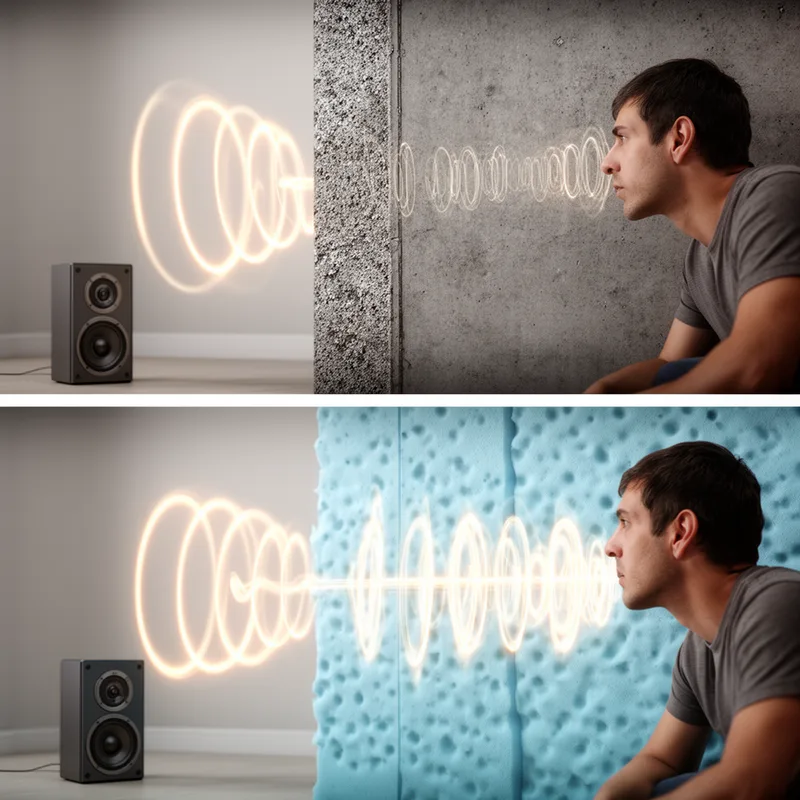
acoustic impedance
- noun
- /əˈkuːstɪk ɪmˈpiːdəns/
- Specialized
- The pressure in water is well below the pressure in the compression wave running to the right, into the gold volume in Figs. 12-14, which is caused by the large difference between the acoustic impedances of water and gold (Z.sub.Au); we have Z.sub.Au/Z.sub.wt = 40 under normal conditions.
Examples
-
Another vibration method in tissue assessment involved the measurement of the tissue acoustic impedance, which was related to the stiffness of the tissue (153).
Academic text (2001) -
And again, it's the difference in acoustic impedance that gives a reflection of acoustic waves, right?
-
It's a much lower acoustic impedance here than in the surrounding areas.
-
Measuring the displacements of an IHD within the auditory pathway, incorporating all the natural resonances and acoustic impedances, is possible using LDI.
Academic text (1998) -
The acoustic impedance of this material affects how sound waves travel through it.
-
Engineers monitor acoustic impedance to optimize sound quality in audio equipment.
-
A lower acoustic impedance may allow sound waves to pass through more easily.
Surface Forms
Morphology
acoustic + impedance
The compound combines 'acoustic' (relating to sound) with 'impedance' (opposition or resistance), so its meaning as the resistance to the passage of sound is directly derivable from the constituents. Although it names a technical measurement, it follows a regular adjective+noun composition and is expressed similarly across languages, so a learner who knows both words would grasp the basic meaning.
Etymology
The term acoustic impedance paints a picture: acoustic means sound and impedance is like a push-back against that sound, as if sound were water hitting a wall. So acoustic impedance tells us 'how much sound is stopped or sent back' by a material.

