
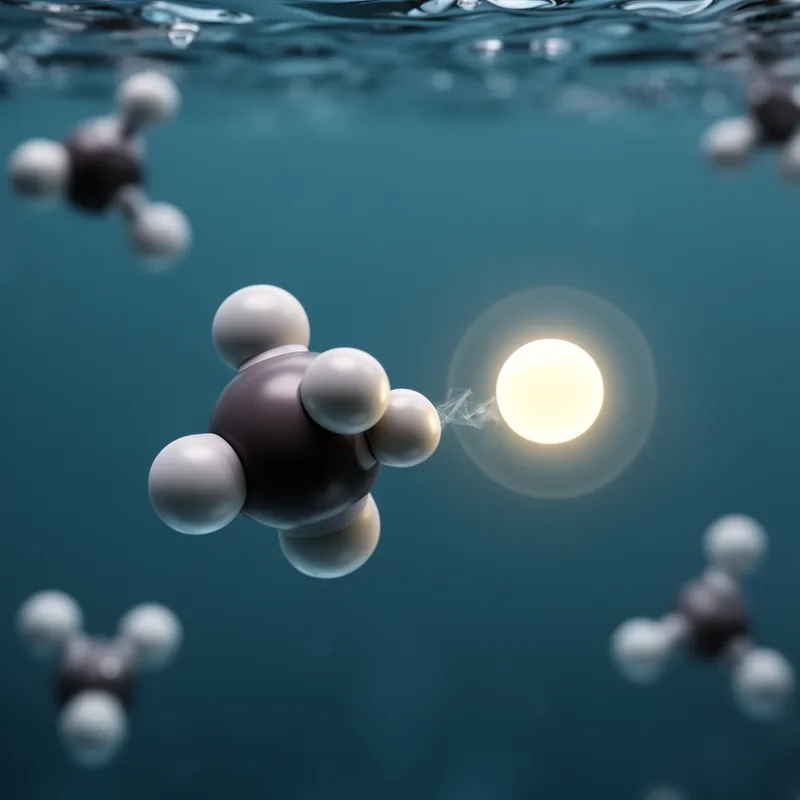
acidic hydrogen
- noun
- Specialized
- The molecule then wreaks havoc as it releases its acidic hydrogen ion and fluoride ion in the presence of cations such as calcium and magnesium.
Examples
-
In a strong acid, the acidic hydrogen can detach and ionize, contributing to the solution's acidity.
-
When mixed with water, the acidic hydrogen from the compound readily disassociates, forming protons that lower the pH.
-
Chemists study how the acidic hydrogen of various acids influences their reactivity in chemical reactions.
Synonyms

A hydrogen atom in an acid that can leave as a positive proton
Surface Forms
Morphology
The noun phrase is directly compositional: 'acidic' (having acid properties) modifies 'hydrogen' (the element), so it straightforwardly denotes hydrogen that is acidic or associated with acids. While full understanding of proton donation is technical, the basic sense 'hydrogen related to/accompanying acids' is predictable from the constituents for a B1 learner.
Etymology
Acidic hydrogen gives a clear picture: a hydrogen atom in an acid that is ready to leave. When that hydrogen leaves as a small positive particle called a 'proton', the acid becomes acidic, so the phrase means a hydrogen that can be 'released' as a positive ion.

