
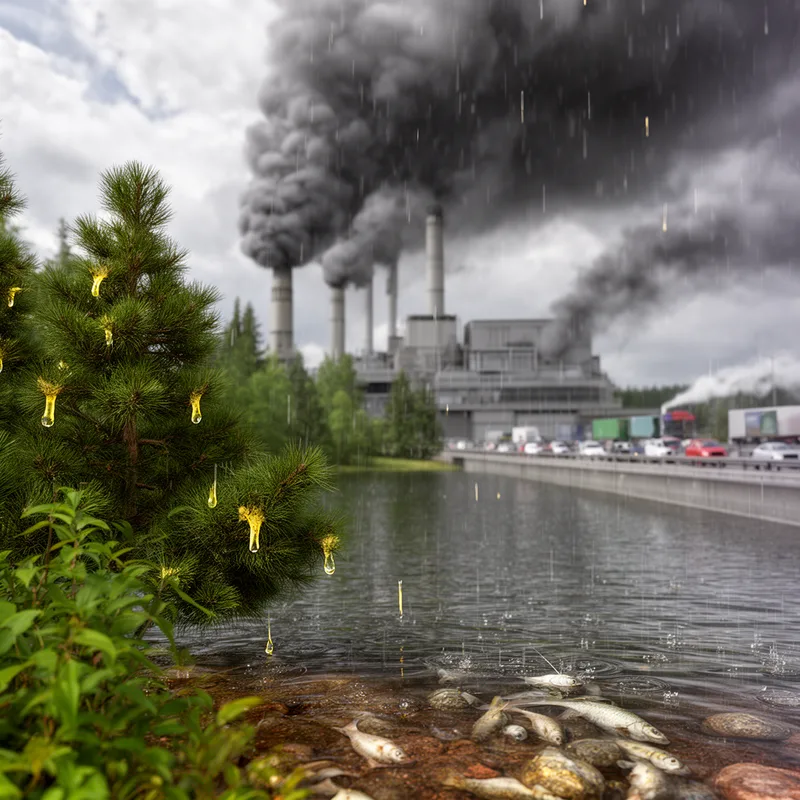
acid precipitation
- noun
- /ˈæsɪd ˌprɛsɪpɪˈteɪʃən/
- Specialized
- The high levels of acid precipitation in the region have led to significant damage to the local forests.
Examples
-
Farmers in the area are concerned about how acid precipitation affects their crops and soil health.
-
For example, Britain and Germany export acid precipitation and gain all of the benefits of the economic activities generating it.
Academic text (1990) -
The Energy Security Act of 1980 created the Federal Interagency Task Force on Acid Precipitation.
Academic text (1991) -
In that region, acid precipitation has destroyed 180,000 hectares of forests and damaged an additional 382,000 hectares.
Academic text (1996) -
The German government made little effort to control industrial emissions until the effects of acid precipitation were manifest in its own forests and soils (costing $1.4 billion per year).
Academic text (1992) -
Scientists have found that acid precipitation can harm aquatic life by lowering the pH of water bodies.
Synonyms

 16
3.3
16
3.3

Rain made acidic by pollution from factories that harms plants and water
Surface Forms
Morphology
The compound is directly compositional: a B1 learner who knows 'acid' (something with low pH) and 'precipitation' (rain, snow, etc.) can infer it means precipitation that is acidic. This noun+noun combination follows a common descriptive pattern and is cross-linguistically transparent, so the overall meaning is predictable from the parts.
Etymology
The term acid precipitation comes from the idea of acid, meaning harmful chemicals in the air, joining precipitation like rain or snow and falling to the ground. So it means 'rain or snow that is more acidic than normal and can damage forests, lakes, and buildings'.