

acid halide
- noun
- /ˈæsɪd ˈhaɪlaɪd/
- Specialized
- The preparation of an acid halide often involves reacting a carboxylic acid with thionyl chloride.
Examples
-
When an acid halide is hydrolyzed, it produces the corresponding acid and a hydrogen halide.
-
Acid chlorides are a common type of acid halide used in organic synthesis.
-
An acid halide is often used in organic synthesis.
-
Many acid halides are reactive compounds.
-
Acid chlorides are a common type of acid halide used in organic synthesis.
-
The preparation of an acid halide often involves reacting a carboxylic acid with thionyl chloride.
-
When an acid halide is hydrolyzed, it produces the corresponding acid and a hydrogen halide.
Synonyms
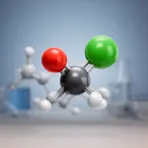
An organic compound with a carbon double-bonded to oxygen and attached to a halogen like chlorine or bromine
Surface Forms
Morphology
The term is directly compositional: combining 'acid' (an acidic compound) with 'halide' (a halogen-containing compound) signals a halogen-containing derivative of an acid, so a learner who knows both constituents can infer the general meaning. The precise structural notation (–COX) and mechanistic details are technical chemistry knowledge beyond B1, but the basic semantic relation is transparently derived from the parts.
Etymology
Acid halide is a chemical name made from acid + halide. A 'halide' is a group with a halogen like chlorine or bromine that replaces the acid's usual 'OH' part, so the name literally tells you it is an acid changed by a halogen.

