

acaulescent
- adjective
- /ˌeɪkəˈlɛsənt/
- Specialized
- Some species of violets are acaulescent, with leaves and flowers arising directly from the rootstock.
Examples
-
The dandelion is a well-known acaulescent plant found in many meadows and lawns.
-
Unlike woody shrubs, many alpine plants are acaulescent to endure harsh winds above the soil surface.
-
The acaulescent plant thrives in rocky soil.
-
Many acaulescent species can be found in tropical regions.
-
Some species of violets are acaulescent, with leaves and flowers arising directly from the rootstock.
-
The dandelion is a well-known acaulescent plant found in many meadows and lawns.
-
Unlike woody shrubs, many alpine plants are acaulescent and grow close to the ground.
Synonyms
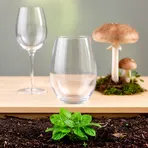
Without a stalk joining a leaf, flower, mushroom, or glass to its base
Antonyms


How Stemmed

Surface Forms
Morphology
acaulescent = caulescent (opaque) = a + caulescent
The word is formed by adding the negative prefix 'a-' to the technical botanical adjective 'caulescent', which is unlikely to be known to an average learner.
Etymology
Acaulescent starts with a- meaning 'not' and has caul meaning 'stem', the same root you see in cauliflower. So acaulescent describes a plant with 'no visible stem' above the ground, with leaves and flowers coming straight from the base.

