
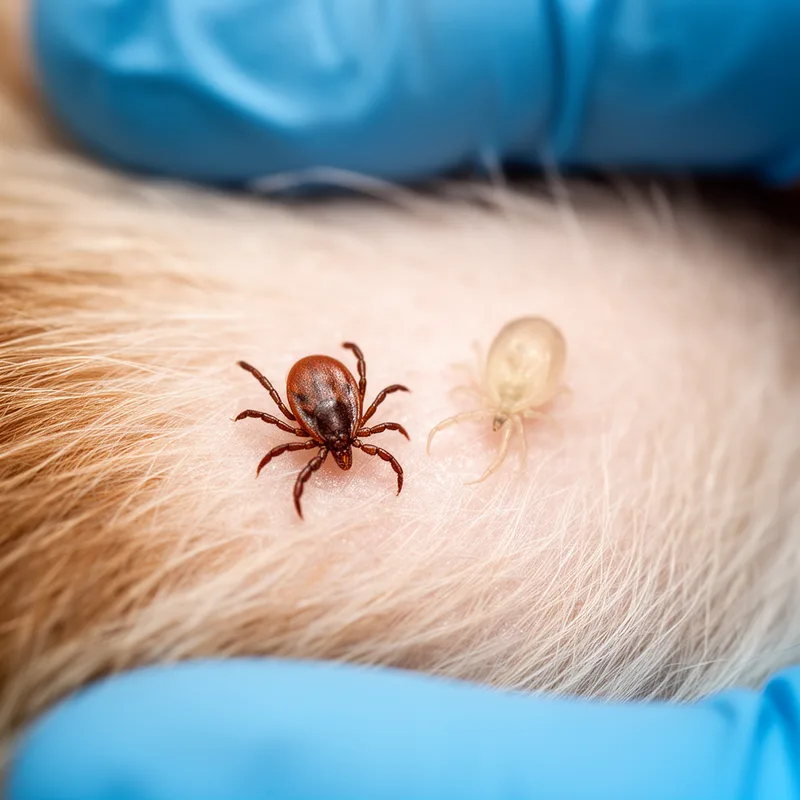
acarine
- noun
- /ˈækəˌraɪn/
- Specialized
- The veterinary clinic found several acarines on the stray dog's skin.
Examples
-
Some acarine species can transmit diseases to plants and animals.
-
Many acarines are harmless and play important roles in ecosystems.
-
Researchers are studying how acarines adapt to different environments.
-
The acarine population is increasing in many regions.
-
Researchers are studying how acarines thrive in various environments.
-
Some acarine species can carry diseases that affect both plants and animals.
-
The veterinarian discovered several acarines infesting the stray dog's fur.
Synonyms

 27
6.3
27
6.3

A very small animal like a tiny spider that lives on animals, plants, or in food
A tiny animal like a spider that lives on plants or animals
A very small animal like a mite or tick that lives on animals and plants and can harm them
How Small
- Specialized
 9
6.8
9
6.8
Surface Forms
Morphology
acarine = Acari (semi-transparent) = acari + ine
The adjective is formed by the regular suffix '-ine' meaning 'pertaining to' applied to the taxonomic base 'Acari', yielding 'relating to mites and ticks'.
Etymology
The word acarine comes from an old Greek word akari meaning 'mite', so it names very small arachnids like mites and ticks. Think of arachnid, the familiar word for spider relatives, which helps show why acarine refers to these tiny, spider-like animals.