
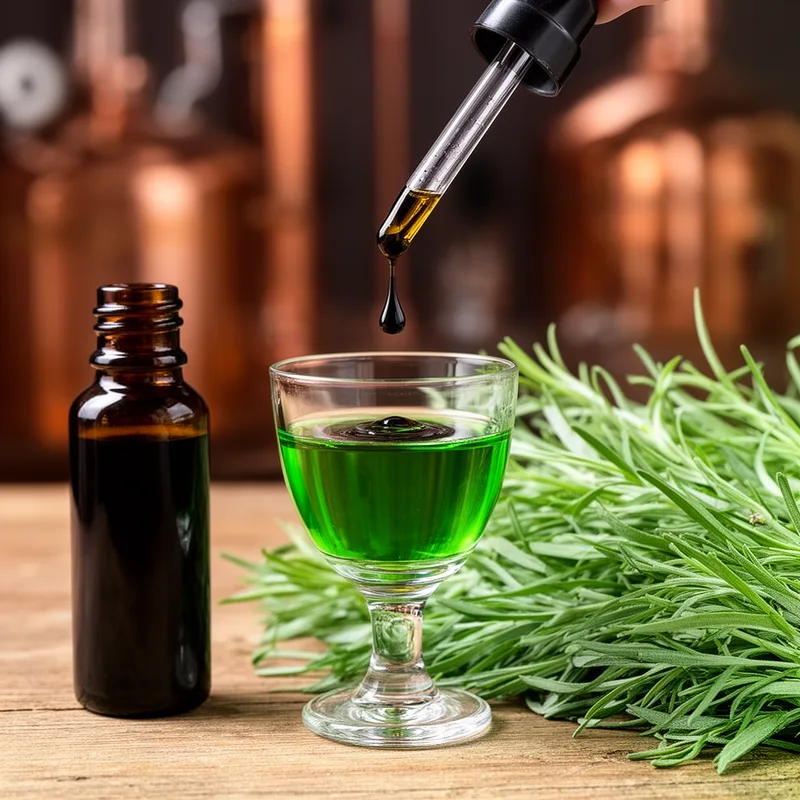
absinthe oil
- noun
- /ˈæbsənθ ɔɪl/
- The distiller added a few drops of absinthe oil to enhance the liqueur's herbal notes.
Examples
-
Pure absinthe oil can be extremely bitter if not carefully diluted in the recipe.
-
Historically, absinthe oil was extracted from wormwood to create traditional absinthe drinks.
-
The recipe calls for absinthe oil to enhance the flavor.
-
I bought some absinthe oils for my cocktail bar.
-
Historically, absinthe oil was extracted from wormwood leaves to flavor traditional absinthe liqueurs.
-
Pure absinthe oil can lend an intensely bitter taste if not properly diluted in cocktails.
-
The bartender mixed a few drops of absinthe oil into the drink to enhance its herbal flavor.
Synonyms

A dark oil from wormwood leaves that gives absinthe its bitter taste
Surface Forms
Morphology
The meaning is directly built from 'absinthe' (the spirit flavored with wormwood) plus 'oil' (a liquid substance), so a learner who knows both words can infer this refers to an oil associated with or used to flavor absinthe. This noun-noun compositional pattern is cross-linguistically common and therefore readily understandable to a B1 learner.
Etymology
The noun absinthe oil comes from squeezing the bitter leaves of the wormwood plant to make a dark, strong oil, and makers added a few drops to give absinthe its sharp, herbal taste, so the name now means the oil used 'to flavor' the liqueur.

