
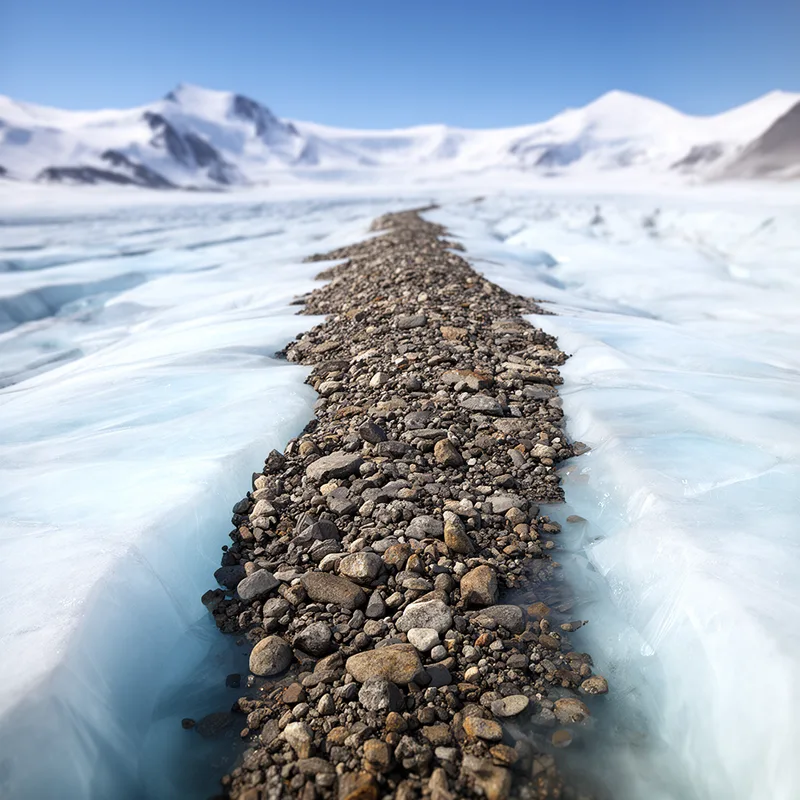
ablation moraine
- noun
- /əˈbleɪʃən mɔˈreɪn/
- UK
- The ablation moraine featured a thick cover of rocks that insulated the glacier below.
Examples
-
When the glacier melted, the ablation moraine was left as a distinctive ridge on the landscape.
-
Scientists studied the ablation moraine to understand the retreat of the ice sheet.
-
The ablation moraine was clearly visible at the glacier's edge.
-
Scientists studied the ablation moraines to understand glacier dynamics.
-
Scientists studied the ablation moraine to understand the retreat of the ice sheet.
-
When the glacier melted, the ablation moraine was left as a distinctive ridge on the landscape.
-
The ablation moraine featured a thick cover of rocks that insulated the glacier below.
Synonyms
 3
9.9
3
9.9

A ridge of stones and earth left by a glacier
A ridge of rocks and dirt that lies on top of a glacier
Surface Forms
Morphology
The noun combines 'ablation' (melting/erosion of glacier surface) with 'moraine' (glacial debris), so its meaning — debris/moraine produced or exposed by ablation and resting on the glacier surface — is directly inferable from the parts. Although it is a technical term, the composition follows normal English noun–noun semantics and would be understandable to a learner who knows both constituent words.
Etymology
Ablation moraine shows a simple picture: ablation means the ice is 'melting' or 'wearing away', and a moraine is a pile or layer of rocks on the ice, so as the glacier melts the loose rocks are left behind. That's why the term means a layer of rock debris sitting on the surface of a glacier.