

to ablate


 1
9.9
1
9.9
- verb
- /əˈbleɪt/
- Specialized
- A Coblation wand was used to completely ablate the lingual tonsil tissue from the vallecula and to achieve hemostasis (Figure 3).
Loading YouTube…
Watch on YouTubeWell, yes, you could like ablate either the posterior or the anterior pathway.
- Well, yes, you could like ablate either the posterior or the anterior pathway.
Examples
-
I had my thyroid ablated nearly 30 years ago with radioactive iodine due to Graves' disease.
Blog text (31) -
But she's just had her toenail ablated.
Blog text (12) -
They also have gone in and just ablated structures.
-
Well, yes, you could like ablate either the posterior or the anterior pathway.
-
Working with an electrical engineer, we designed RF arrays to ablate tumors.
Academic text (2017) -
You're not allowed to ablate humans, you can't stick electrodes in their skulls.
-
Radiofrequency ablation employs radiofrequency energy to ablate hypertrophied nasal turbinates.
Academic text (2008) -
The deletion allele leads to a premature stop, likely ablating gene function, and purifying selection may perhaps explain the low frequency of the allele in nature.
Academic text (2017) -
The administration of high-dose radioactive iodine to ablate normal thyroid remnants can lead to sialadenitis, pulmonary fibrosis, and leukemia.
Academic text (2002) -
The doctor decided to ablate the tumor to prevent it from spreading further.
Synonyms
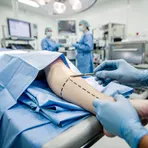 48
7.2
48
7.2
To cut off a limb or body part by surgery
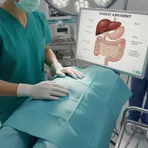 6
9.5
6
9.5
To remove the inside parts of a body, often in animals or surgery
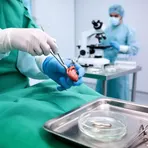 1
8.5
1
8.5
To remove a device, organ, or tissue from a body for study

To remove an organ or body tissue completely by surgery
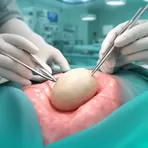
To remove a growth or organ whole from the tissue around it

To remove the contents of an organ by surgery
How Much

Surface Forms
Etymology
Ablate comes from the Latin ablatus, which means 'taken away' and includes the prefix ab- meaning 'away', like in absent. So in medicine, to ablate tissue is to 'take away' or remove it, for example by surgery or by using a laser.