
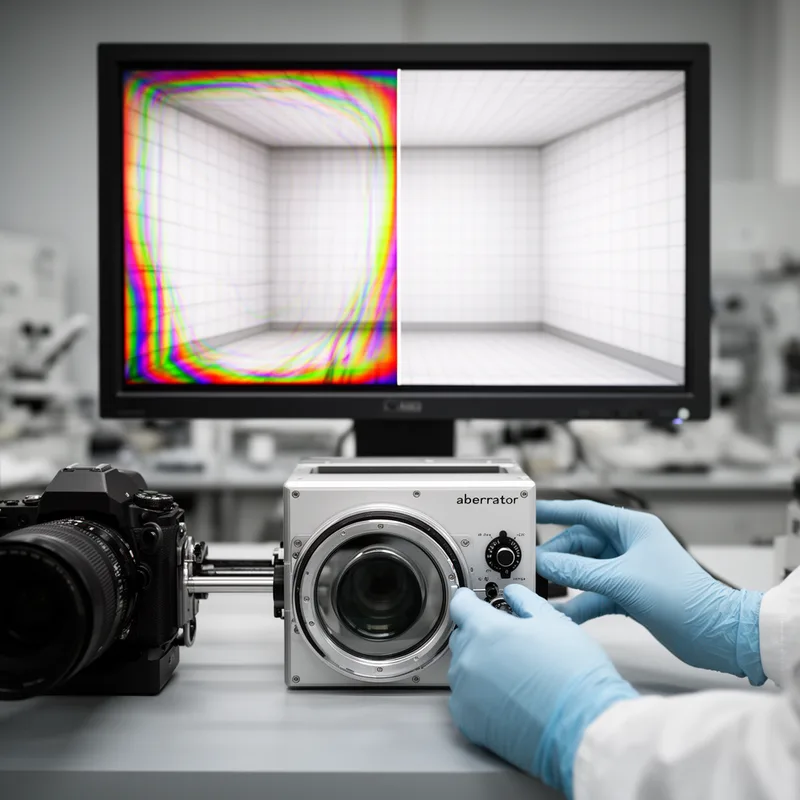
aberrator
- noun
- /ˈæbəˌreɪtər/
- Specialized
- Researchers designed an aberrator for their optical experiments.
Examples
-
The new software aberrator allows engineers to simulate various types of lens imperfections.
-
The laboratory technician adjusted the aberrator to test the camera's response to lens distortions.
-
Using an aberrator, researchers can study how optical flaws affect image quality.
-
The new aberrator improved the image quality significantly.
-
The scientist calibrated the aberrator to enhance the clarity of the images captured by the telescope.
-
An advanced aberrator was added to the camera system to correct color distortions.
-
To improve the quality of the photographs, the technician adjusted the aberrator settings before the shoot.
How Effective
- Specialized


 1
4.3
1
4.3
Surface Forms
Morphology
aberrator = aberrate (semi-transparent) = ab + err + ate + or
Formally an agent/instrument formed from 'aberrate' + '-or', but the sense as a technical device is a specialized extension and may not be obvious to general learners.
Etymology
Aberrator comes from the Latin parts ab- 'away' and errare 'to wander', the same root you see in English error and errant. So in optics an aberrator is a tool or program that makes or fixes things that 'stray' from the true image.