

abduction
 9
6.8
9
6.8

- noun
- /æbˈdʌkʃən/
- Archaic
- The deltoid and rotator cuff both contribute to arm abduction, with differing contributions depending on the degree of abduction.
- shoulder abduction
- hip abduction
- abduction and flexion
Examples
-
For external and internal rotation, the glenohumeral joint was at 45 degrees abduction.
Academic text (2004) -
Secondary outcomes included surgical treatment, abduction splinting, level of mobility, resource use, and costs.
Academic text (2002) -
This is the hip abduction...
-
Less significant findings from this study were weakness with abduction and pain with active forward flexion.
Academic text (2016) -
The cricoarytenoid joints were mobile, but abduction was limited by the tissue band.
Academic text (2009) -
In those patients, abduction and external rotation positions should be avoided to limit recurrence.
Academic text (2003) -
Flexible laryngoscopy shows the position of the vocal folds at maximum abduction during a respiration-sniff task.
Academic text (2006) -
Care must be taken initially to ensure this progression does not aggravate symptoms, as greater abduction increases supraspinatus activation.
Academic text (2016) -
Traditional treatment involves periods of bed rest, mobilization using walking aids, non-weight-bearing, abduction bracing, and surgical containment.
Academic text (2005) -
During physical therapy, he learned exercises to improve hip abduction for better mobility.
Antonyms
Surface Forms
Morphology
Etymology
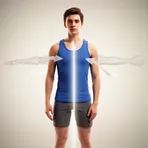
Abduction comes from the parts ab- meaning 'away' and duct from the Latin ducere meaning 'to lead'. So in medicine, an abduction is a movement where an arm or leg is 'led away' from the middle of the body, like lifting the arm out to the side.