

Zigadenus venenosus gramineus
- noun
- Specialized
- Cattle can become seriously ill after ingesting Zigadenus venenosus gramineus while grazing.
Examples
-
Botanists warn about the dangers of Zigadenus venenosus gramineus to livestock in the region.
-
Zigadenus venenosus gramineus grows in open grasslands and is often mistaken for edible plants.
-
Beware of Zigadenus venenosus gramineus!
-
Farmers should be cautious of Zigadenus venenosus gramineus in their fields.
-
The rancher learned the hard way about the dangers of Zigadenus venenosus gramineus to his cattle.
-
Many animals can get sick from eating Zigadenus venenosus gramineus, making it a serious threat in pastures.
-
It is crucial for livestock owners to recognize Zigadenus venenosus gramineus to prevent poisoning.
Synonyms

A poisonous plant with grass-like leaves that kills grazing animals
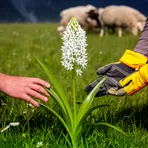
A plant with leaves like grass and small white flowers that is poisonous

A North American plant with grass-like leaves and white poisonous flowers
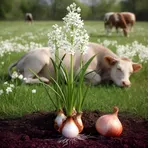
A wild plant whose bulbs look like wild onions and can make animals or people sick
Surface Forms
Morphology
Zigadenus + venenosus + gramineus
This is a taxonomic Latin name formed compositionally: the genus Zigadenus (a poisonous-plant genus) plus Latin adjectival elements likely meaning 'poisonous' (venenosus) and 'grass-like' (gramineus). Given knowledge of the constituent parts, the overall meaning — a poisonous, grass-like subspecies of Zigadenus (death camas) — is directly derivable, though it is specialized botanical terminology.
Etymology
Zigadenus venenosus gramineus may come from Latin words: Zigadenus is the plant group name, venenosus means 'poisonous' and gramineus means 'of the grass'. So the name gives a simple picture — a poisonous, grass-like plant, which explains why it is dangerous to animals that graze.

