
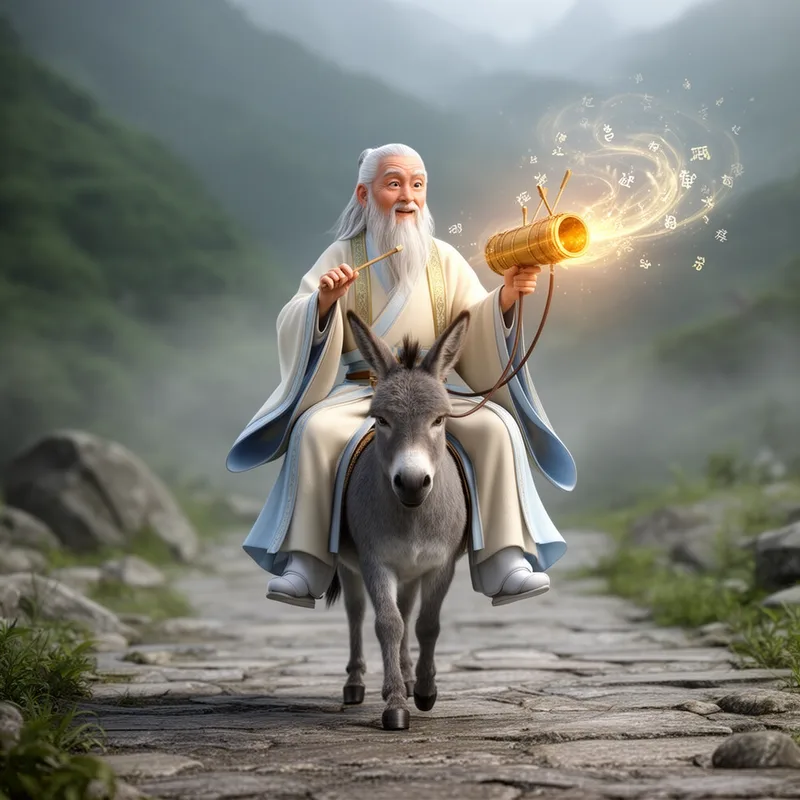
Zhang Guolao
- proper noun
- Literature
- In ancient tales, Zhang Guolao is famous for riding his donkey backwards.
Examples
-
Many paintings of the Eight Immortals include Zhang Guolao with his magical bamboo drum.
-
The legend of Zhang Guolao reflects themes of longevity and enlightenment in Taoism.
-
According to legend, Zhang Guolao rides a donkey backwards.
-
Many stories depict Zhang Guolao as a wise old man.
-
In ancient tales, Zhang Guolao is famous for riding his donkey backwards.
-
Many paintings of the Eight Immortals feature Zhang Guolao with his magical bamboo drum.
-
The legend of Zhang Guolao showcases the themes of wisdom and magical abilities in Taoism.
Synonyms
One of the Eight Immortals in Taoism who appears as an old man riding a donkey backwards
One of the eight immortals in Chinese Taoist stories shown as an old man riding a donkey backwards
Surface Forms
Morphology
Zhang + Guolao
This is a proper name for a specific mythological figure; the components 'Zhang' and 'Guolao' are not productive English morphemes and carry no compositional meaning in English. A B1 learner who knows the constituent orthographic parts but lacks cultural/encyclopedic knowledge of Chinese mythology would not be able to infer the referent or attributes from the parts alone.
Etymology
Zhang Guolao comes from old Chinese stories about one of the Eight Immortals who often rode his donkey backwards and played a small bamboo drum. The strange picture of riding backwards and the magic drum showed his special wisdom and long life, so Zhang Guolao stands for a 'wise' or 'magical' old figure.

