
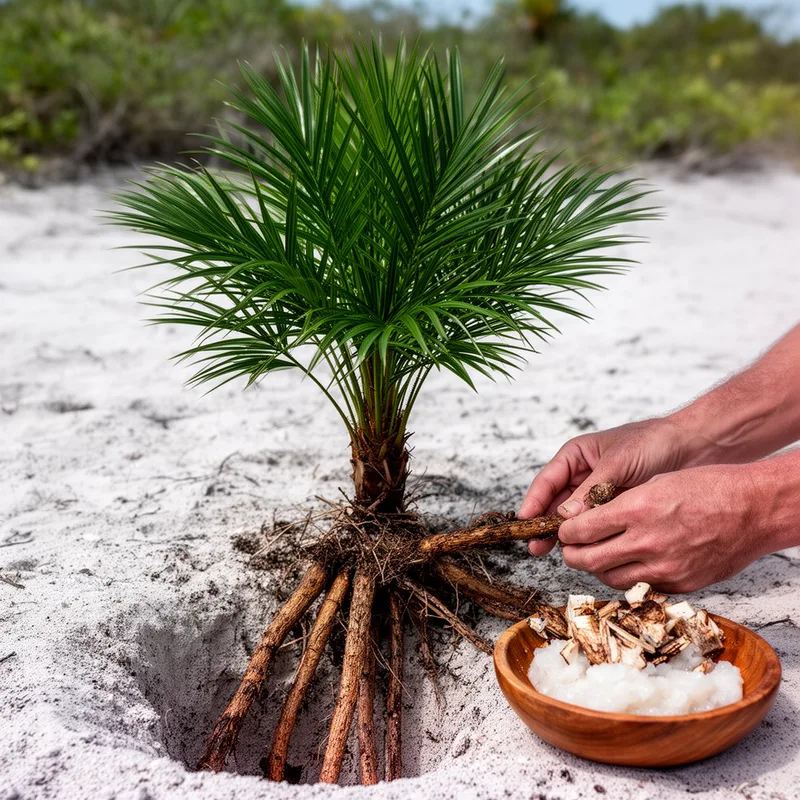
Zamia pumila
- noun
- Specialized
- Native peoples traditionally used the roots of Zamia pumila to make arrowroot.
Examples
-
The Zamia pumila is commonly found in sandy soils across southern Florida.
-
Many gardeners appreciate the Zamia pumila for its resilience.
-
Botanists study Zamia pumila for its resilience and unique reproductive cycle.
-
The Zamia pumila thrives in sandy soils.
-
The native peoples traditionally used the roots of Zamia pumila to produce arrowroot flour.
-
Botanists are particularly interested in Zamia pumila because of its tough roots and stems.
-
In Florida, Zamia pumila is a popular choice for landscaping due to its hardy nature.
Surface Forms
Morphology
zamia + pumila
This is a Latin binomial (scientific) name functioning as a proper noun; its sense as a specific species ('a small Zamia') depends on taxonomic/Latin knowledge rather than standard English composition. The second element 'pumila' is not an English word in the provided data, so a B1 learner who only knows ordinary English constituents would not be able to derive the meaning, making the expression non-compositional and opaque.
Etymology
Zamia pumila comes from the plant group name Zamia and the Latin word pumila, which means 'small' or 'dwarf'. The name gives a clear picture of a small, woody cycad with tough roots used to make arrowroot, so it fits this little plant found in Florida and the Caribbean.

