
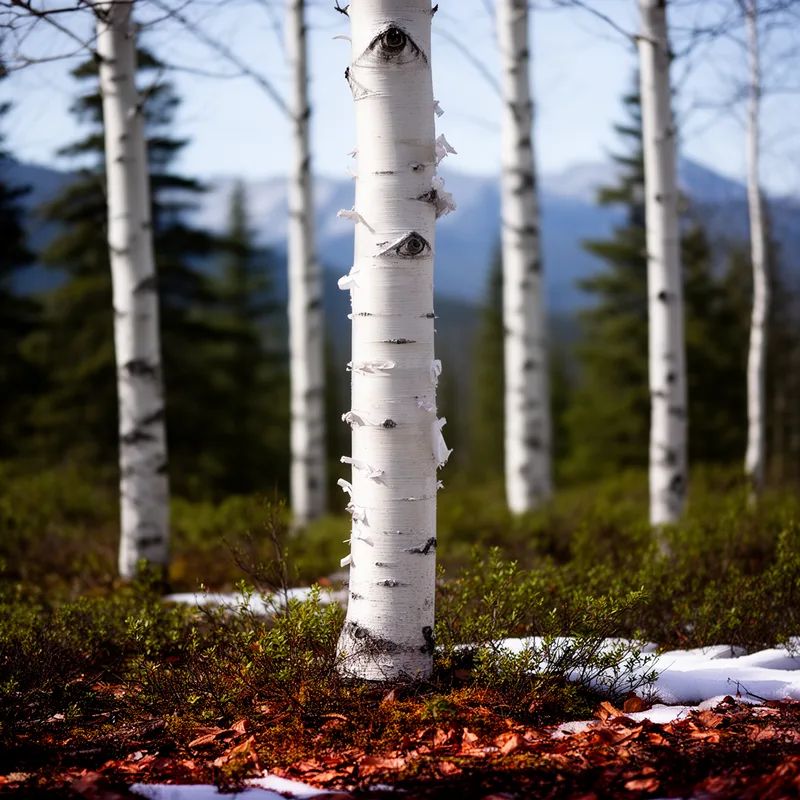
Yukon white birch
- noun
- Specialized
- The Yukon white birch thrives in the forests of Alaska and northern Canada.
Examples
-
We admired the pale bark of the Yukon white birch during our hike.
-
Researchers are studying how the Yukon white birch adapts to colder climates.
-
The Yukon white birch has striking white bark.
-
Many Yukon white birches grow in the forests of Alaska.
-
The Yukon white birch is known for its distinctive white bark that stands out in the forest.
-
During our hike, we saw several Yukon white birch trees with beautiful pale brown branches.
-
In autumn, the leaves of the Yukon white birch turn a bright yellow, adding color to the landscape.
Synonyms
A birch tree with pale bark that grows in Alaska and northwest Canada
Surface Forms
Morphology
The meaning is directly compositional: 'Yukon' (a place) + 'white' (color) + 'birch' (a tree) yields a white birch associated with the Yukon. This locative + adjective + noun pattern is common cross-linguistically, so a B1 learner who knows the three words would readily infer the intended species reference.
Etymology
Yukon white birch comes from the place and the tree's look: Yukon is the northern area where it grows, and white birch describes its pale, often white bark. So, the name simply means a birch tree 'native to the Yukon' with a pale trunk.

