

Yucca filamentosa
- noun
- /ˈjʌkə fɪləˈmɛntoʊsə/
- Specialized
- The stiff, sword-shaped leaves of Yucca filamentosa have distinctive white threads along their edges.
Examples
-
The Yucca filamentosa plant is often used in landscaping for its striking foliage and drought tolerance.
-
The Yucca filamentosa thrives in dry, sandy soils.
-
Gardeners appreciate Yucca filamentosa for its resilience and ease of care in sandy soils.
-
Have you seen a Yucca filamentosa in bloom?
-
Gardeners appreciate Yucca filamentosa for its resilience and ease of care in sandy soils.
-
The Yucca filamentosa plant is often used in landscaping for its striking foliage and drought tolerance.
-
The stiff, sword-shaped leaves of Yucca filamentosa have distinctive white threads along their edges.
Synonyms

 4
7.1
4
7.1

A plant with long stiff pointed leaves and white flowers that grows in warm dry places
 4
9.3
4
9.3
A plant like a spiky bush with long stiff leaves that have thin threadlike edges
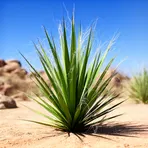
A plant that grows in dry places with long stiff leaves that have thin threads along the edges

A desert plant with long stiff leaves that have thin threads at the edges
Surface Forms
Morphology
yucca + filamentosa
This is a standard binomial botanical name combining 'yucca' (a plant) with the adjectival epithet 'filamentosa' meaning 'filament-like' or 'filamentous', so the overall meaning (a yucca with filament-like threads on its leaves) is directly derivable from the constituents. Although 'filamentosa' is a Latin/technical form that many B1 learners may not know, if a learner does know both parts the composition is transparent and follows a regular genus+descriptor pattern.
Etymology
The plant name Yucca filamentosa points to how the plant looks: Yucca is the plant group and filamentosa comes from a word meaning 'many threads', because its long, stiff leaves have thin white threads along their edges. That's why it is also called 'Adam's needle' and why the name reminds you of the plant's needle-like leaves and thread-like edges.