
Yucatecan


 1
8.6
- noun
- /ˌjuːkəˈtɛkən/
- Yucatecan socialism
Examples
-
In the first place, although many Yucatecans (especially women) supported prohibition, it was ended in no small part because of widespread and mostly male resistance.
Academic text (2002) -
The new elites came from much humbler origins than the old Yucatecan planter oligarchy.
Academic text (2002) -
This charismatic, self-educated leader led Yucatecan socialism in a more radical, democratic, and agrarian direction.
Academic text (2002) -
To staff hundreds of large and small henequen haciendas cheaply, the Yucatecan landowners relied on debt peonage.
Academic text (2002) -
Mestizos and Yucatecan Maya historically have concentrated in the northern districts after arriving in Belize during the Guerra de las Castas.
Academic text (1997) -
Laurie Greenberg regards as the most important finding of her work the discovery that immigrant house lots are a symbol of Yucatecan ethnicity (1996, 234).
Academic text (2004) -
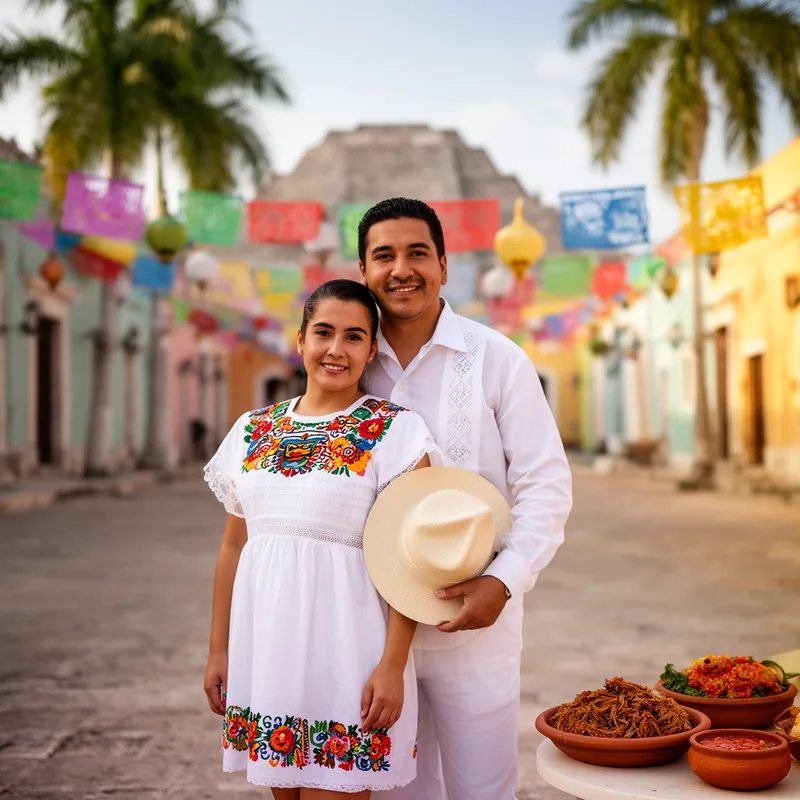
Carlos is a proud Yucatecan who shares stories about his childhood in Merida.
-
As a Yucatecan, Maria often prepares traditional dishes that reflect her cultural heritage.
-
The community festival celebrated the vibrant culture of Yucatecan people through music and dance.
Surface Forms
Morphology
Yucatecan = Yucatec (transparent) = Yucatec + an
A regular demonymal formation: 'Yucatec' + '-an' yields a noun meaning a person from or of Yucatán.
Etymology
Yucatecan comes from the place name Yucatán, with the ending -an/-ean meaning 'from', just like American. So a Yucatecan is a person 'from Yucatán' who comes from or lives in that region.